By Angelo Suarez
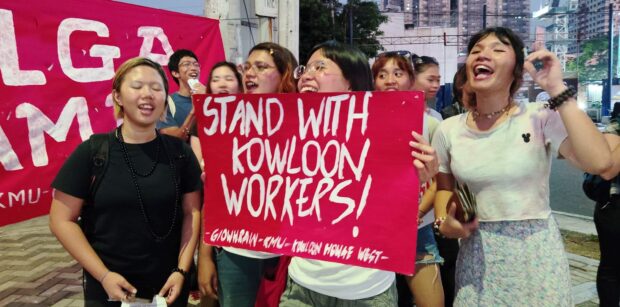
The Frankfurt Book Fair boycott and the Philippine anti-imperialist movement are not mutually exclusive. How strange to think that they do not come hand in hand.
Frankfurt Book Fair boycotters are right to boycott the Frankfurt Book Fair. The fair is not “the world capital of ideas” that just happens to accommodate Zionists by chance; its programming and actions have demonstrated that it is, in fact, a platform for propagating Zionism, deodorizing genocide, and normalizing the US-backed colonization of Palestine by Israel. Moreover, the Frankfurt Book Fair boycott aligns with the Boycott-Divest-Sanction movement, itself prompted and shaped by the demands of Palestinians for solidarity themselves.
Filipinos participating in the Frankfurt Book Fair are wrong to participate in the Frankfurt Book Fair. Especially given the context that the Philippines is the Fair’s Guest of Honor. Having more boycotters strengthens the boycott; having less boycotters weakens it. While it helps the boycott when Fair participants express their sympathy for — not just tolerance or understanding of — the boycott, it nevertheless diminishes the boycott’s potential and impact: one step forward, two steps back. A strong boycott is a solid boycott.
The boycott highlights the culture industry’s role in colonialism and imperialism everywhere in the world. It does so by presenting the Frankfurt Book Fair as an exemplary hasbara machine championed by the culture industry to propagate Zionism, deodorize genocide, and normalize the US-backed colonization of Palestine. It is the Fair, not the boycott, that is divisive of oppressed peoples who should stand in, and benefit from, solidarity with each other. Majority of Palestinians hail from the peasantry; so do most of Filipinos. The petit-bourgeoisie, where the urban intellectual comes from, are also an oppressed class, despite their shifting class loyalties.
The Filipino intellectuals participating in the Frankfurt Book Fair are not class enemies. They may not be as oppressed as the Palestinian who every minute lives with Israel’s genocidal US-backed occupation, or as the Filipino peasant who every day struggles with feudal landlessness in the face of rural militarization promoted by US imperialism, but they number anyway among the oppressed classes. They have everything to gain from the boycott their participation in the Fair diminishes.
The class contradiction faced by the urban petit-bourgeoisie is real: they may know the boycott helps them in a systemic sense, but material circumstances — for example, the possibility of straining relationships with institutions and employers — present risks to their livelihoods or even simply lifestyles that, at the moment, they are unprepared to face, live with, or overcome.
However, the fact that they are allies in a common fight against imperialism does not make their participation in the Frankfurt Book Fair correct, neither does their inability to face, live with, or overcome the risks that come with joining the boycott. More importantly, it does not reverse the hurt their participation inflicts on the anti-imperialist action of the boycott as both a material and symbolic force. There is no justification for participating in the hasbara machine of the Frankfurt Book Fair.
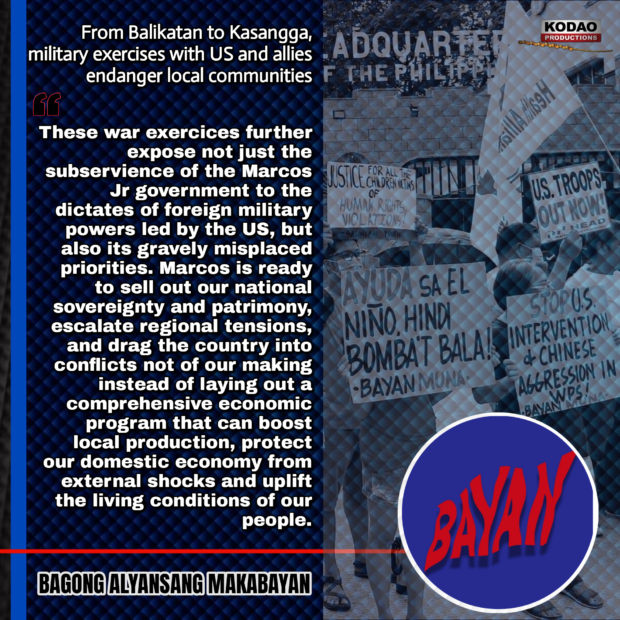
But some wrongs are forgivable or understandable, especially when the wrong choice to participate is made by class allies under material duress. One can still do what one can without belittling the boycott: make anti-Israel pro-Palestine noise online or in Frankfurt, and join other forms of anti-imperialist mobilization in the Philippines such as the annual June 12 “Independence” Day rally that puts US imperialism at the crosshairs of our collective anger. The rally could benefit from the presence of Fair boycotters, just as the boycott could benefit from the support of rallyists among Fair participants.
Ultimately, what effectively combats colonialism and imperialism is an anti-colonial, anti-imperialist mass movement. A boycott without a mass movement means little, but a boycott as a tool in a mass movement’s armory means a lot. A Fair boycott by intellectuals outside of the mass movement is an invitation to pull these intellectuals into the mass movement; just as importantly, a Fair boycott by intellectuals already within the mass movement is an invitation to examine how to strengthen the boycott as a tool for the mass movement. #
= = =
Notable Filipino artists and writers are calling for the boycott of the book fair for its alleged pro-Zionist objectives. Here are more statements on the matter: