By Prof. Sarah Raymundo/President, Philippines-Bolivarian Venezuela Friendship Association
First of two parts: The Empire’s Latest Gambit
On January 3rd, the world witnessed a brazen escalation in the imperial war against the Global South. U.S. military forces, in a flagrant violation of the United Nations Charter and all norms of international law, conducted airstrikes on Venezuelan soil. This act of war was followed by the extraordinary rendition — a state kidnapping — of the democratically-elected President Nicolás Maduro. The human cost of this aggression was immediate and severe: initial reports from Venezuelan officials and local medical networks indicate over 40 Venezuelan civilians were killed in the bombardments, a stark testament to the operation’s brutal disregard for human life and the principle of non-combatant immunity.
Furthermore, in what has been systematically underreported by Western media, the attacks also resulted in the deaths of Cuban internationalist personnel stationed at legal cooperative defense sites. These losses represent more than casualties; they are an attack on the very principle of Global South solidarity and mutual defense — a cornerstone of the ALBA alliance that has long been a thorn in the side of hemispheric monroeism.
Framed by its perpetrators as a “law enforcement action,” this dual assault represents nothing less than the overt and violent destruction of a nation’s sovereignty, a desperate attempt to achieve through naked aggression what years of hybrid warfare — sanctions, blockades, and disinformation — could not.
Yet, the calculus of empire has once again failed to account for the people. In Venezuela, the Bolivarian Republic remains intact and in charge, its institutions held by the constitutional line of succession and, more critically, by the mobilized will of millions. The streets of Caracas and cities across the nation have erupted in a sea of red, with historic, massive rallies demanding “¡Libertad a Maduro!” and the unconditional return of their president. This is not the picture of a conquered nation, but of an “ungovernable” one, the kind that does not kneel before US imperialism. It is the spirit of resistance forged in the fire of Carabobo and rekindled by Chávez.
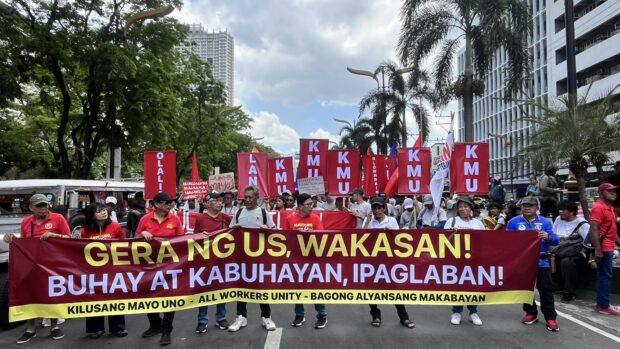
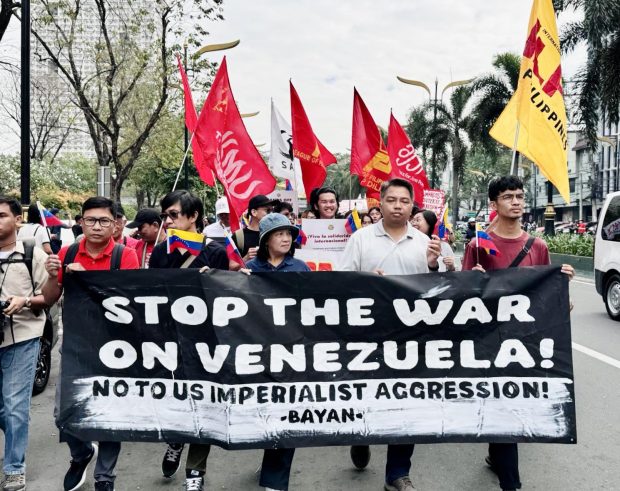
This struggle is not Venezuela’s alone. On January 5th, hundreds of Filipino activists from various sectors marched to the U.S. Embassy in Manila, drawing a direct line from the halls of Malacañang to the palaces of Caracas. Their condemnation of the U.S. aggression and their call for Maduro’s freedom were not gestures of distant sympathy, but acts of recognized solidarity. They understand that the same doctrine that justified the conquest of the Philippines in 1898, the same machinery of subjugation that maintains semi-colonial control today, is the very force now bombing and kidnapping in Latin America. Our histories of resistance against Spanish colonialism diverged, only to converge again in the face of a common imperialist adversary.
This article, the first of two parts, examines the deep historical roots of this convergence. It explores how the Bolivarian Revolution reclaimed a sovereignty that the Philippine Revolution was denied, and how the ongoing battle in Venezuela is a decisive front in our shared, unfinished war for liberation in the Global South.
From Carabobo to Caracas: U.S. Imperialism, the Ghost of Bolívar, and the Unfinished Revolution in Venezuela and the Philippines
The shared history of anti-colonial struggle between Venezuela and the Philippines finds its roots in revolutionary war against Spanish rule — Venezuela at the Battle of Carabobo (1821) and the Philippines through the Katipunan Revolution (1896). Yet their post-colonial trajectories diverged sharply, shaped by the relentless shadow of U.S. imperialism. While the Philippines’ hard-won independence was hijacked, reducing it to a semi-colony, Venezuela’s Bolivarian Revolution under Hugo Chávez represents a late but potent reclamation of sovereignty. This article examines how U.S. aggression today — through sanctions, military threats, and information warfare — targets Venezuela as a continuation of this imperialist project, rooted in the Monroe Doctrine’s logic of hemispheric domination, and why international solidarity rooted in anti-colonial consciousness remains essential to resisting it.
Shared Histories, Divergent Paths: Bolívar, Bonifacio, and the Monroe Doctrine
The Battle of Carabobo secured Venezuela’s independence and enabled Simón Bolívar to forge Gran Colombia — a sovereign revolutionary project. In contrast, the Katipunan’s defeat of Spain was swiftly undermined by the U.S. invasion of 1898, initiating a long period of colonial and neocolonial control. This divergence is not accidental but a direct result of the Monroe Doctrine (1823) and its corrosive evolution into a doctrine of U.S. hemispheric hegemony. Originally framed against European recolonization, it was weaponized by the Roosevelt Corollary (1904) into a self-proclaimed right of the United States to intervene as an “international police power.” This doctrine has served as the ideological bedrock for overt and covert interventions, transforming Latin America and the Caribbean into a U.S. “sphere of influence” where independent development is treated as a threat.
By 1898, the Philippines stood as a semi-colony, its military—the Armed Forces of the Philippines (AFP) — historically subservient to U.S. interests since its founding under Douglas MacArthur. The revolutionary impulse within its ranks, exemplified by patriotic defectors, such as Dan Vizmanos and Dante Simbulan was systematically suppressed by US-Counterinsurgency leveled against the Philippine revolutionary movement. In Venezuela, however, the armed forces retained a historical memory of anti-colonial struggle, becoming a crucible for anti-imperialist patriotism. This produced a Hugo Chávez —
a soldier who transformed his institution into a vehicle for Bolivarian socialism. As Chávez wrote in El Libro Azul: “The soldier of the people is not only a bearer of arms, but the bearer of the community’s conscience, forged in the crucible of national liberation.”
The Chávez Phenomenon: The Military of the People and the 2002 Crucible
Chávez’s ascent from coup plotter to elected president in 1998 was the democratic culmination of popular rejection of a corrupt oligarchy complicit with imperial interests. His agenda of sovereign control over oil and independent foreign policy galvanized fierce opposition, culminating in the U.S.-backed coup of April 2002. Chávez was abducted, and a junta was installed with immediate U.S. recognition. However, within 47 hours, a massive popular uprising and loyalty within the military restored him to power.
The lesson was historic: The Venezuelan people proved themselves “ungovernable” under a U.S.-backed puppet regime. Washington’s forced acquiescence to Chávez’s return demonstrated that direct rule or imposition of a pliant alternative was impossible without triggering uncontrollable civil unrest. This event cemented the “soldier of the people” ethos, later exemplified by the milicias bolivarianas, which institutionalize civil-military unity for social transformation. In stark contrast, the AFP remains an instrument of counterinsurgency, targeting its own people in service of U.S. strategic interests, its revolutionary potential systematically neutered by the Philippines’ semi-colonial condition.
The Caribbean and Venezuela Under Siege: A Timeline of Escalating Aggression
U.S. military and economic aggression against Venezuela has followed a clear escalatory pattern, a modern manifestation of Monroe Doctrine logic, moving from covert intervention to overt blockade and piracy.
Sanctions as Warfare: Targeting the Civilian Population
The U.S. sanctions regime is a deliberate form of economic warfare, designed to inflict mass suffering and compel political submission. The International People’s Tribunal found these sanctions constitute crimes against peace and crimes against humanity, intentionally targeting civilians to cause economic collapse. This verdict is affirmed by UN experts like Alena Douhan, who states the sanctions are illegal under international law and amount to collective punishment. The Center for Economic and Policy Research quantifies the damage at over $200 billion in losses since 2017 and estimates over 100,000 excess deaths by 2019 due to shortages in medicine, food, and critical infrastructure parts. Venezuela’s response — the construction of over 4,000 communes as units of popular sovereignty—is systematically undermined by this ongoing blockade.
Military Buildup, Naval Encirclement, and Aerial Siege (2017-Present)
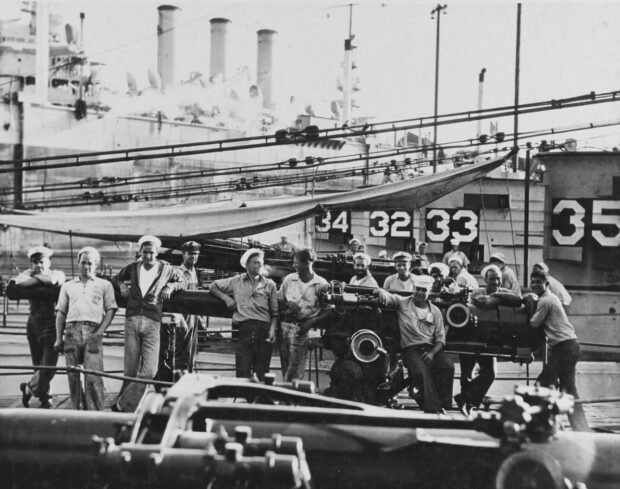
The militarization of U.S. pressure escalated under President Trump’s public flirtation with a “military option.” This materialized as a sustained naval presence, including the 2019 deployment of the USS Abraham Lincoln carrier strike group — the largest U.S. naval force in the region since the 1989 invasion of Panama. This de facto blockade chilled international trade and access.
The aggression expanded to open acts of piracy. From 2020 onward, the U.S. seized or diverted tankers like the Advantage Sweet (2023) and the Maersk Esmeraldas (2024) carrying cargo to Venezuela, violating the United Nations Convention on the Law of the Sea (UNCLOS). In December 2025, the U.S. imposed a sweeping ban on international flights to and from Venezuela, severing its last commercial air corridors and transforming an economic embargo into a comprehensive logistical siege. This is hybrid warfare: a physical strangulation of a nation’s economic and social arteries.
Information Warfare: Manufacturing Consent for Regime Change
To justify its aggression, the U.S. wages a relentless disinformation campaign. Narratives of “authoritarian rule,” “humanitarian crisis,” and fabricated “narco-terrorism” charges against Maduro are amplified by corporate media to manufacture consent for regime change. The invention of Juan Guaidó as “interim president” in 2019 and the promotion of figures like María Corina Machado, expose the absurdity of these efforts, akin to the Philippines’ own experience with U.S.-backed political narratives.
The Unfinished Revolution and Imperative of Solidarity
The ghost of Bolívar haunts Washington’s calculations in Venezuela, just as the spirit of Bonifacio and the Katipunan underscores the Philippines’ unfinished revolution. The divergent paths of their militaries and the sustained aggression against Caracas reveal a consistent truth: U.S. imperialism, under the enduring mantle of the Monroe Doctrine, cannot tolerate sovereign projects that defy its hegemony. The Battle of Carabobo and the Katipunan Revolution were not endpoints but opening chapters in a continuous struggle. Today’s battlefields are economic, informational, and psychological. International solidarity, rooted in a clear understanding of this shared history of resistance against imperialism, is not merely an act of support but a necessary step in the global fight for a polycentric world where nations like Venezuela and the Philippines can determine their own destinies, free from the shadow of empire. The Venezuelan people’s defiance in 2002 and their resilience under siege today prove that a conscious and mobilized populace remains the greatest obstacle to imperial domination. Their struggle is, in essence, the continuation of the same anti-colonial war that began in Carabobo and in the fields of Central Luzon.
(to be continued…)
= = = = = =
*Prof. Sarah Raymundo is the President of the Philippines-Bolivarian Venezuela Friendship Association. She has been a frequent guest to the various meetings, congresses, and conferences, elections and Bolivarian communes activities held in Venezuela and is part of the global stirring committee for the anti- fascist and anti-imperialist struggle for peace and sovereignty initiated in Caracas from September 2024 to the present.