Nueva Vizcaya’s struggle against destructive mining has reached a defining moment. House Rep. Timothy Joseph Cayton’s authorship of House Bill 4502, which seeks to expand protection over the province’s watersheds, may deserve recognition as it reflects a noble intent to safeguard the headwaters that sustain Cagayan Valley’s farms and water systems.
But good intentions are not enough. The congressman’s record on the ground tells a more complicated story. During his term as mayor, Cayton facilitated the approval of an exploration permit for Woggle Corp. — a decision that effectively opened the door to renewed mining activity in upland barangays already reeling from the environmental impact of earlier projects.
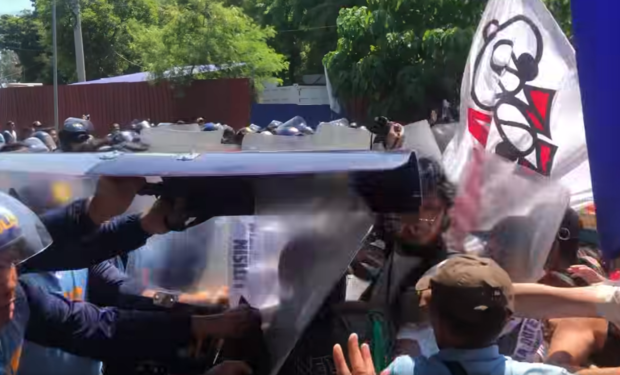
Since then, Woggle’s operations have been linked to illegal tree-cutting, forced entry into private lands, and violations of local ordinances. When residents — many of them Cayton’s former supporters — stood their ground to block the company’s entry, they were met by police forces enforcing Woggle’s passage. In that moment of confrontation, the congressman did not lift a finger to defend the people he now claims to represent.
If Congressman Cayton truly stands for the protection of Nueva Vizcaya’s watersheds, he must begin by calling for the revocation of Woggle Corp.’s exploration permit. Such an act would signal not only his sincerity but his willingness to correct a decision that helped create the very problem he now decries.
Beyond this, he must use the full authority of his office to pursue a congressional inquiry into the activities of OceanaGold, FCF Minerals, and Woggle Corp., focusing on violations of environmental and human rights laws, fiscal transparency, and the apparent failures of regulatory agencies.
He should also file a resolution urging the Department of Environment and Natural Resources (DENR) and the Mines and Geosciences Bureau (MGB) to suspend or cancel mining and exploration permits that endanger Nueva Vizcaya’s ecosystems or communities. The province’s role as a critical watershed for the entire Cagayan Valley should be enough justification to declare it a “No-Go Zone” for large-scale mining.
An independent audit of mining revenues due to the province is equally necessary. For years, residents have demanded transparency in how much mining companies truly contribute — and whether those funds reach local governments and affected communities.
At the same time, indigenous and farming communities that have long resisted destructive mining must be empowered through legal, technical, and financial support. Strengthening their capacity to assert their rights under the “free, prior and informed consent” (FPIC) process will ensure that development proceeds with justice and accountability.
Lastly, Congressman Cayton can make a lasting contribution by pushing for amendments to the Philippine Mining Act of 1995 — to permanently ban mining in critical watersheds and ancestral domains, to require public disclosure of all mining revenues, and to make congressional concurrence necessary for the renewal of large-scale mining contracts.
If Cayton once opened the door to Woggle’s exploration, he now has the moral duty to close it — and to stand with the very people who are now left to defend their lands alone. #