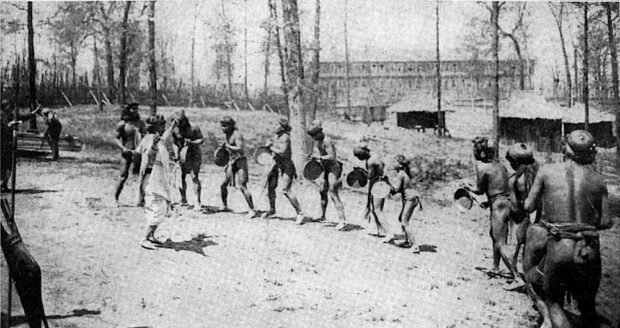
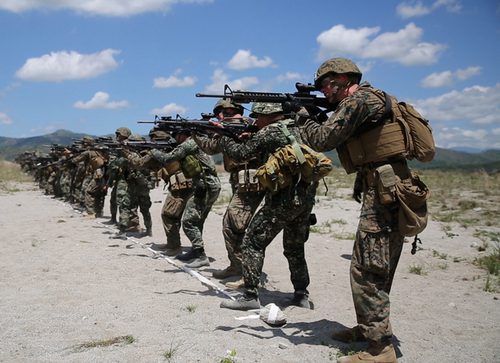
Here is a poignant tribute by a friend and colleague to legendary Filipino photojournalist Alex Baluyut who passed last February 28.
by Atty. Karlos Ysagani Zarate
I first heard his name as a whisper. A legend.
Even before I met him, Alex Baluyut haunted the edges of our newsroom in Davao—a name the senior journalists spoke with a reverence reserved for those who had truly been there.
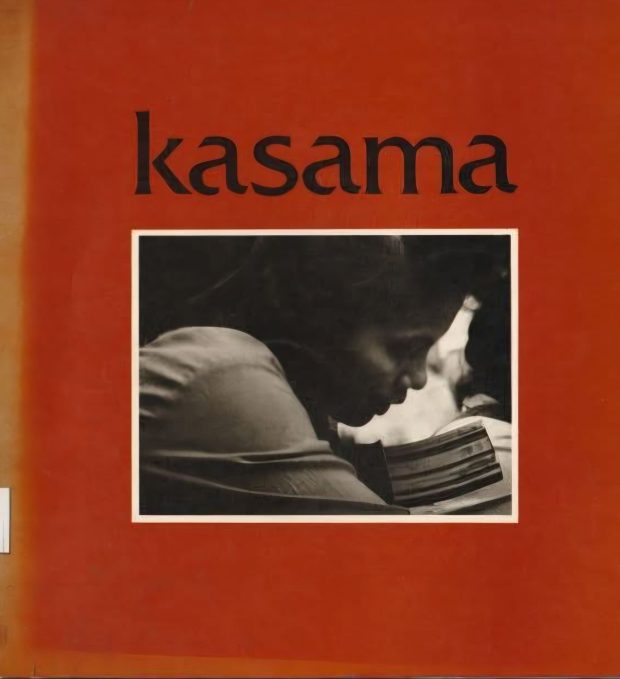
They talked about Kasama, his award-winning book on the New People’s Army, not as a mere collection of black and white photographs but as a document of immersion—of living and breathing the mountains alongside the guerrillas.
To me, a young and hungry reporter just finding my footing with Ang Pahayagang Malaya and the Media Mindanao News Service (MMNS), he belonged to a history I was only beginning to understand.
Then one late afternoon, the ghost became flesh.
He appeared at the MMNS office in Davao City—lean, quiet, with eyes that seemed to look past surfaces.
The dictator Marcos was gone, but Alex, I would learn, could never quite stay away from Mindanao. The island had entered his bloodstream in the early eighties, during the darkest years of the dictatorship, and it never left him. He was not there on assignment. He was simply passing through, needing to feel the pulse of the place again.
He was introduced around the room, and when his gaze settled on me, there was no dismissal, no condescension toward the aspiring young reporter. Only genuine curiosity.
“So you’re the new one from here,” he said, his voice low and unhurried. “You’ve got the best seat. You must see everything.”
That was it. That was the door he opened.
Our friendship was not built on formal mentorship. It was built on his returns. He kept coming back to Mindanao, a constant presence in changing times, and Davao was always his gateway. He would show up—camera bag slung over his shoulder—and find us wherever we were: the MMNS bureau, some dingy carinderia with good pusô, someone’s rented table.
And always, there was the beer. San Miguel Pale Pilsen. Ice-cold bottles sweating onto sticky tables. That was the ritual. Alex would pop the cap, take a slow pull, and the stories would begin.
He talked about the mountains, about the faces he had photographed, about fear and conviction. He would spread contact sheets across tabletops—tiny negatives holding entire worlds—and ask me, “What do you see here, Kaloi? What’s the story the picture doesn’t show?”
He taught me to read the silence between images.
In return, I gave him the ground-level view—the gossip from city hall, the shifting loyalties of politicians, the stories that never made it beyond Davao’s borders. He listened with an intensity that made me feel my local eyes mattered as much as his decades of experience.
We drank and debated for hours, the clink of bottles marking time.
The talk was always politics—the absurd theater in Manila, fragile peace negotiations, old warlords in new costumes. Sometimes we agreed. Often we sat in comfortable silence, wrestling with a world that resisted simple answers.
Those nights taught me what it meant to be a witness.
Alex showed me that you cannot document a place from a distance. You must love it first. You must sit in its heat, drink its beer, listen to its people, and let it enter your blood the way Mindanao had entered his.
Even now, long after the bottles have been cleared and the nights have faded, I still hear his voice: low, unhurried.
“So, what do you see?”
I am still learning how to answer.
The Mountains of Surigao
There is one memory that stands above the rest—when everything Alex taught me about bearing witness became flesh and blood.
In April 1992, Alex, a foreign photojournalist whose name escapes me now, and I received an invitation that stopped my heart. The New People’s Army in Surigao del Sur wanted us to “visit and see.” Their words. They wanted us to interview five government soldiers they were holding as prisoners of war.
The soldiers had been captured weeks earlier after an ambush that left many others dead.
The military was screaming “massacre.” The NPA was saying, “No, they are alive, they are POWs, come see for yourselves.” And for some reason, they chose us.
I remember looking at Alex when the message came through. His face gave nothing away, but his eyes—those eyes that had seen so much already—they just got very quiet, very still.
“We go,” he said. Not a question. A statement.
The trek took five days—up and down punishing mountains, across rivers determined to sweep us away, guided by two young guerrillas carrying M16s.
Alex moved as if his body remembered the rhythm. The foreigner struggled. I struggled. Alex walked steadily, occasionally stopping to study the light filtering through the canopy, already seeing photographs before they existed.
When we reached the camp, deep inside NPA territory, the five soldiers were there—thin but not starved, weary but not tortured. They sat under a bamboo shelter, guarded by young rebels who watched them with something complex—not hatred, not camaraderie. Just vigilance.
The soldiers looked at us like apparitions—journalists emerging from the jungle, invited by their captors.
Alex did not rush. He sat near them, letting his presence settle. He offered cigarettes. Asked where they were from—Ilocos, Cagayan, a small Mindanao town I had never heard of.
They were mostly young men fighting a war they likely did not understand and now at the mercy of an adversary they had been taught to hate.
When Alex began photographing, he did so deliberately. Slower. Not click after click after click, but patiently—waiting for a shaft of light falling across a young soldier’s face, for a glance, for the unguarded moment. He would lift his camera, then lower it, wait some more.
The soldiers relaxed. They forgot the camera. And that was when he captured them—not as POWs, not as symbols, but as human beings.
One soldier, the youngest, had a poorly bandaged wound. Alex noticed immediately.
He crouched beside him, examined it quietly, and called over an NPA medic.
No speeches. No politics. Just: “He needs this cleaned properly.”
That was Alex. The person always came before the photograph.
When the soldiers finally spoke about their families, their fear, their confusion at being alive when their comrades were not—they spoke to him. Not to his camera. To him.
Watching him that day, I understood something fully for the first time. Alex did not document struggle from outside it. He entered it.
He earned trust on both sides. The NPA trusted him because he had been with them in the mountains years ago, because Kasama was real, because he had never betrayed that trust. The soldiers trusted him because he saw them—really saw them — as humans not as pawns in someone else’s war.
When we left three days later, the soldiers shook our hands. They thanked us—especially Alex—for coming, for listening, for reminding them they were still human.
On the long walk back, I asked him how he carried so many stories without breaking.
“You don’t carry them, Kaloi,” he said after a long silence. “You let them pass through you. Your job is to make sure they pass through cleanly. Truthfully. Without your own noise getting in the way.”
We stopped at the first sari-sari store along the highway. We bought warm San Mig—no electricity, no ice. We didn’t care.
That silence over warm beer said everything.
Club Dredd and Other Worlds
Years later, in 1997, I visited him in his Quezon City residence. Alex was still deep in his work then, still moving through the world with that camera, still documenting stories that needed telling. Photojournalism, documentary projects—he was as active as ever, his passion undimmed by the years. Still purist!
And me? I had traded my reporter’s notebook for a law book. I was a newbie public interest lawyer then, freshly minted and idealistic, still believing that the law could be a weapon for the people we had both spent our careers trying to serve.
So we sat in his place, just like old times, the familiar ritual of bottle caps popping open, the familiar golden liquid filling our glasses.
We talked about everything and nothing. The cases I was handling, the stories he was chasing. The way Mindanao continued to bleed, the way Manila continued to pretend it didn’t hear. We reminisced about those Davao nights, about the mountains of Agusan and Surigao, about friends we had lost and friends who had simply drifted away.
And then, because it was Alex, because the night was still young and the beer was still flowing, he said, “Come. There’s someplace you need to see.”
He took me to Club Dredd. Right there along EDSA, that endless river of chaos. The place pulsed with rock music, loud and unapologetic, a different kind of truth-telling from the kind we practiced.
And there, holding court, was a figure I recognized immediately even through the haze of smoke and sound. Joey Pepe Smith. Legend. Myth. Madman.
Alex led me through the crowd, and before he could even introduce me properly, Pepe’s eyes locked onto me with the intensity of someone who had just seen a ghost from his favorite memory. He threw his arms wide and screamed at the top of his lungs, right there in the middle of Club Dredd: “PARE! LONG TIME NO SEE! LET’S ROCK AND ROLL!”
I stood there, frozen, while Alex doubled over laughing. Pepe grabbed my shoulders, beaming like I was his long-lost brother, and I just let it happen. I didn’t have the heart to tell him I had no idea who he thought I was.
Alex, still wiping tears from his eyes, finally managed to interject: “Pepe, this is Kaloi. Kaloi. My friend from Mindanao. The journalist. Now lawyer.”
Pepe squinted at me for a long moment, processing this information with the visible effort of someone trying to reassemble a shattered mirror. Then he shrugged, grinned even wider, and said, “Kaloi! Even better! Let’s drink!”
After more laughter, we drank deep into the night, listening to music that felt carved from bone. Alex moved through that world as effortlessly as he did the mountains.
He collected people the way others collect souvenirs—and he shared them.
Completing the Circle
Much later, the years had done their work on both of us. I was no longer a newbie lawyer but a member of Congress, a strange and uncomfortable fit for someone who had started as a journalist in Davao, but life takes you where it will.
Alex had found his way to Los Baños, to a quieter life with beloved wife Precious, his partner in everything.
Quiet life? Not quite.
Quiet for Alex was never truly quiet—it just meant his work took different forms. I visited them in their home nestled in the shadow of Mount Makiling. The air was cooler, the pace slower, but Alex’s eyes still held that same alertness, that same readiness to see. And over cold San Migs—of course—he and Precious told me about their new project.
The Art Relief Mobile Kitchen. It was so perfectly them: Artists and journalists and ordinary citizens coming together to cook food for victims of disasters—both natural and man-made. “We feed the hungry in times of distress. This is our Creed.”
Alex had spent his life documenting suffering; now he was doing something to directly address it. A mobile kitchen that could roll into any community shattered by typhoon or earthquake or human cruelty, and just… feed people. Simple. Direct. Human.
“You should see it in action,” Alex said, and I could hear the pride in his voice. “We go where the stories are, but instead of taking, we give. Hot meals. Something warm in their bellies while they figure out what comes next.”
We talked for hours about how we could collaborate, how we could bring the kitchen to Mindanao, to the places we both still loved.
In the years that followed, ARMK did several relief missions, back in my island, back in the communities I had once covered as a young reporter. Seeing Alex there, ladling soup instead of holding a camera, serving rice instead of documenting hunger—it was like watching him complete a circle I had not even known he was drawing.
The Last Protest
In September 2014, I joined press freedom advocates and journalists outside the House of Representatives protesting the so-called Anti-Selfie Bill—absurd legislation that sought to penalize photographing public officials without consent. Absurdity armed with law is just authoritarianism wearing a clown nose.
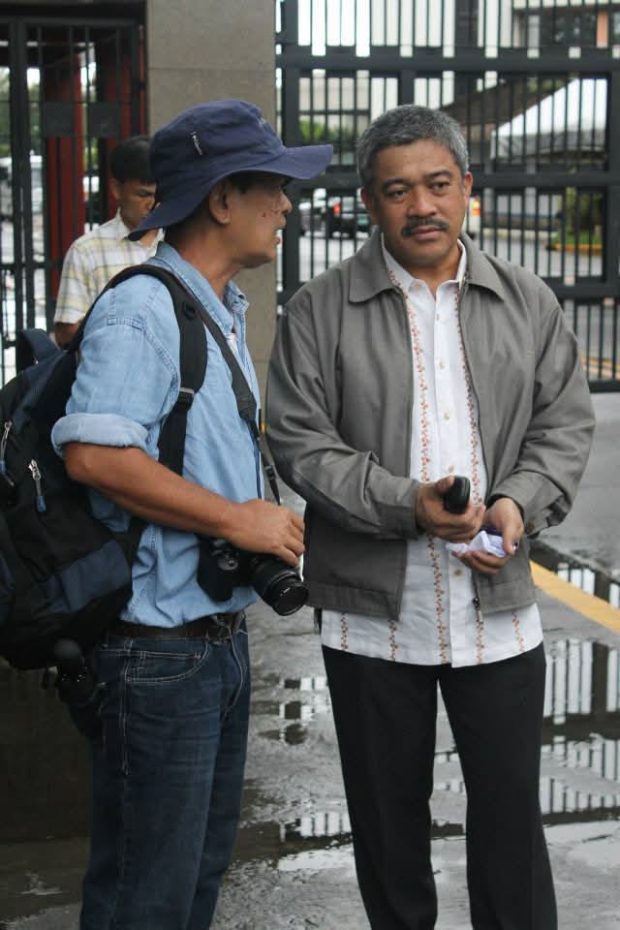
Alex was there, camera around his neck. Still watching. Still documenting.
Afterward, we found a small stall nearby, the kind of place that sells warm beer and cold noodles, and we sat, San Mig bottles in hand, watching the world go by.
“You know,” he said, somewhere in the middle of our comfortable silence, “when we first met, you were just a kid in Davao who wanted to see everything.”
I retorted: “And you were a legend who wouldn’t stay away from Mindanao.”
He laughed, that low rumble I had d known for decades. “Some things don’t change.”
No, I thought. Some things don’t. The friendship, the beer, the commitment to seeing clearly and telling truly—those things didn’t change. They just deepened, like roots reaching further into the earth.
I did not know then that this would be our last beer together. How could I? Alex seemed eternal, as permanent as the mountains he had spent his life documenting. But life, as we both knew too well, does not ask permission before it takes.
When I heard he was gone last Friday, I did not cry immediately. Instead, I sat quietly, and in my mind, I could hear the clink of bottles, the low rumble of his voice, the question he always asked: So, what do you see?
I see you, Alex. I see our friendship, stretching across decades and islands, held together by cold beer and warm memories.
I see the mountains of Surigao, where warriors on both sides of a war were treated as human beings.
I see steam rising from a mobile kitchen in a battered town. I see a crowded rock club shaking with music and laughter.
I see a quiet man with a camera, waiting for light.
And I see the lesson you left us: that journalism is not about spectacle. It is not about speed. It is not about ego. It is about being human enough that others trust you with their humanity.
Alex never chased fame. He chased truth. And he did it the old-fashioned way—by showing up, staying long enough to listen, and letting the story breathe. That kind of work does not fade. It roots itself.
And I will keep seeing. #