by Alvinson Aligam
As the country commemorates the 75th anniversary of the universal adoption of International Humanitarian Law (IHL) this August, we are reminded that honoring the principle and the treaty is not only about remembering past violations. It is also about honoring those who stand firm for justice and resist the persistent waves of militarization driven by fascist policies of the government.
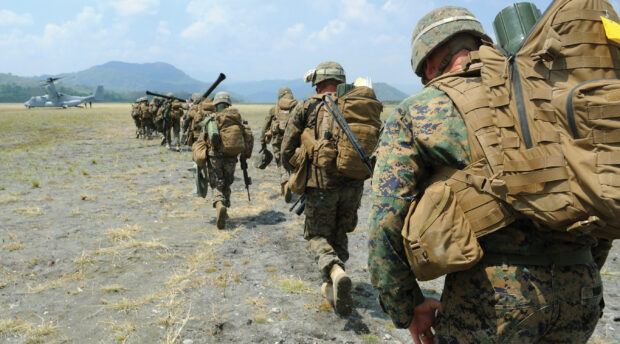
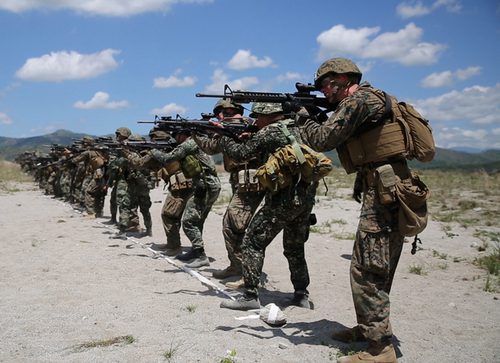
Militarization had been an overpowering presence in the countryside for decades. State military forces have carried out operations that deeply impact the lives and rights of rural communities, particularly indigenous peoples. These operations that are the core of counter-insurgency campaigns aim to suppress progressive groups and revolutionary movements. But the civilians suffer its effects the most, especially the most marginalized.
Among the gravest consequences are forced displacement of families, the spread of fear, and the erosion of peace in affected communities. At the core of these attacks are systematic violations of basic human rights.
Viole
Viole Dela Cruz is a 36-year-old Dumagat from Sta. Ines, Rizal. She and her first husband Randy made a living by selling fruits and vegetables. Every day, they carried their produce from the mountains, crossing rivers and trekking rugged trails to reach the lowlands where they can sell their goods. Survival for Viole’s family has never been easy. With several of their children attending elementary and high school, they face the daily struggle of meeting both basic and educational needs.
Life was hard for the family that was made harder by government’s war against its people. Viole’s husband was killed by police, accused without proof of being part of the New People’s Army (NPA). Viole insists he was not.
Randy was a victim of the Bloody Sunday Massacre of March 7, 2021. A total of nine unionists and human rights defenders like Randy and his brother Puroy perished on the day the police implemented a region-wide mass murder across Southern Tagalog. Puroy and Randy were advocates of Indigenous peoples rights.
More than four years since the brothers were killed, their families are still being harassed by the police to force them to drop charges against the killers. The National Union of Peoples’ Lawyers last June revealed that on June 15, 2025, uniformed personnel confronted Viole at her home in Tanay, Rizal, in an attempt to coerce the family into silence and deter them from pursuing legal action.
Karapatan added that among those who “visited” Viole as well as Puroy’s family were agents of the National Bureau of Investigation “ to offer cash assistance to buy the families’ silence,” it said. “These attempts by State elements to obstruct the course of justice is truly deplorable,” said Karapatan secretary general Cristina Palabay. “Four years have passed since the Bloody Sunday Massacre and not a single perpetrator has been punished,” she added. “Instead, the bereaved families are being threatened, harassed and intimidated.”
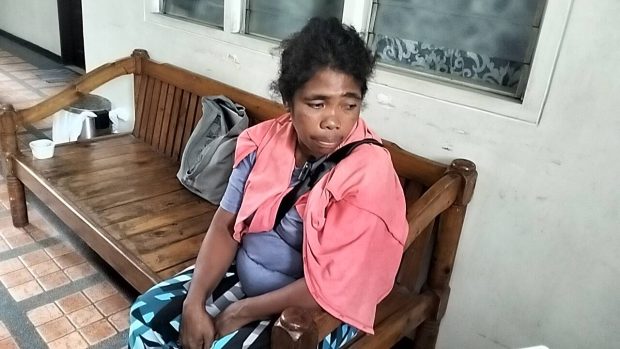
“Our family did nothing wrong,” Viole told Kodao, her voice heavy with grief. “But ever since the police killed my husband, that’s when fear began.”
Viole said the feeling never left them since that early Sunday morning. Every arrival of military forces in their village brought not safety but terror. Other community members were red-tagged, others simply gunned down for no reason at all. Since their tribe members were killed, Viole and the other survivors had been terrified to venture far from their community to sell their goods, afraid they too might not return home.
“The military has made it too dangerous,” she says. “Since the deaths, we’ve been afraid to venture out.”
Nationwide terror
Viole’s story is just one of many. Across the country, Indigenous peoples continue to face forced displacement, harassment, and murder. According to the Legal Rights and Natural Resources Center (LRC)–Friends of the Earth Philippines, at least 73 documented cases of human rights violations affecting over 237,000 Indigenous individuals have been recorded this year. This is a staggering 428% increase since President Marcos Jr. took office, the center said.
The violations are not isolated incidents, LRC said. These are part of a larger pattern, one where militarization is used to silence dissent, suppress exercise of democratic rights, and clear the way for corporate interests in ancestral lands. Instead of empowering Indigenous communities, the State is a violent presence. Instead of addressing the roots of poverty and conflict, it sends military forces.
Even international observers have taken notice. In February 2024, UN Special Rapporteur Irene Khan echoed earlier calls by her predecessor Ian Fry to abolish the National Task Force to End Local Communist Armed Conflict (NTF-ELCAC) and end the practice of red-tagging—the dangerous labeling of individuals or organizations as terrorists or communists without due process.
These calls, however, are ignored.
The Ferdinand Marcos Jr. government even had the audacity to host this year’s Asia Pacific regional conference on Internationla Humanitarian Law. Most probably, it wants the world to think of it as an IHL champion, one that abides by its commitment before the world.
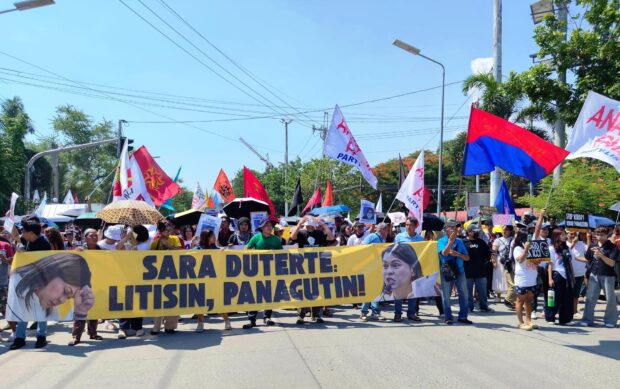
The local human rights community would have none of the canard, though. They organized a rally at the conference venue not to embarrass the Marcos government but to simply show the hundreds of foreign delegates that it is lying. Among the protesters are Indigenous peoples and advocates.
The conference is over and August, IHL month, is just about over. Viole may have gone back to her community to go on with her life and continue the fight against militarization. #
= = = = = =
SOURCES:
https://iwgia.org/en/philippines/5674-iw-2025-philippines.html
https://nupl.net/stop-the-harassment-of-bloody-sunday-victims-families-hands-off-our-clients/
https://www.karapatan.org/media_release/karapatan-condemns-harassment-of-bloody-sunday-massacre-kin/
INTERVIEW WITH VIOLE:
https://drive.google.com/file/d/18iU0M0bviQPwBz1aT5_79YWxVtWyN3Ga/view?usp=drivesdk