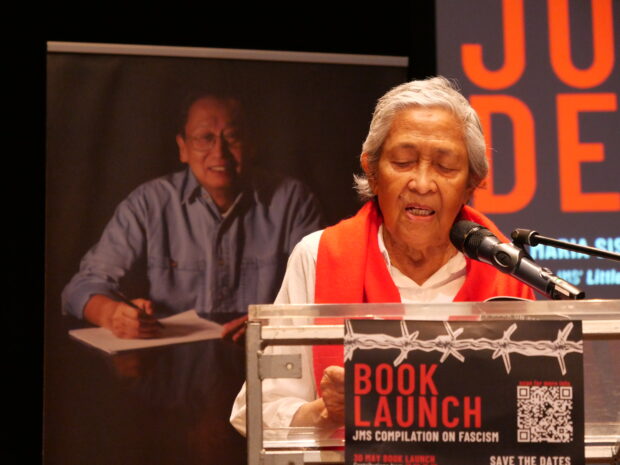
Publisher: Jose Maria Sison Legacy Foundation, 2026 (156 pages)
by Sarah Raymundo
At a moment marked by genocide, widening wars, anti-terror laws, militarization, and the normalization of authoritarian politics, Jose Maria Sison’s “Little Book on Fascism and How to Fight It” reads less like a historical reflection than a warning issued directly to the present.
The book’s enduring strength lies in its refusal to reduce fascism to personalities, political temperament, or democratic backsliding. Fascism, for Sison, is not simply the excess of cruel leaders or the erosion of liberal institutions. It is a historical and political response to crisis—a mode through which ruling classes preserve domination when ordinary mechanisms of consent become increasingly unstable.
Composed of essays, speeches, and interviews across several decades, the collection functions as an extended political education on fascism as historical process. Running through the text is a consistent argument: fascism intensifies when systems in crisis can no longer govern primarily through consent and increasingly rely on coercion if not outright war.
READ: Joma Sison’s book on fighting fascism launches
As Sison writes, the capitalist ruling class “used fascism to fight” militant workers and revolutionary movements when “bourgeois liberal and social democratic parties and politicians were no longer sufficient to fool the workers and other toiling masses” (p. 40). This argument situates fascism not outside capitalism but within it.
Drawing from the Marxist-Leninist understanding of imperialism, Sison traces fascism to the transition from competitive capitalism to monopoly capitalism, where finance capital and giant corporations increasingly dominate political life and global accumulation depends on expansion, militarization, and geopolitical control. Economic crises, sharpening inequality, and intensifying rivalries among powerful states generate conditions in which sections of the ruling class increasingly turn to chauvinism, anti-communism, surveillance, militarism, and political terror.
For Sison, the rise of fascism in Germany and Italy was never accidental. The Great Depression intensified social unrest while exposing capitalism’s instability. In response, fascist movements redirected mass anger away from monopoly capital and toward communists, minorities, and colonized peoples. As he notes:
“The Great Depression during the decade of 1930s… pushed the growth of fascism on a global scale… the big bourgeoisie let loose fascism to suppress and crush the workers parties, unions and workers movements.” (p. 39).
This insistence on fascism as a class project remains one of the book’s most important interventions. Fascism is not simply authoritarianism. It is not merely concentrated power or democratic erosion. It is the organized deployment of repression, militarism, chauvinism, anti-communism, and state terror to preserve a crisis-ridden social order.
This distinction matters because liberal and Marxist analyses often speak past one another.
Liberal discourse tends to ask: Who is violating democracy? It focuses on constitutions, elections, executive overreach, and illiberal leaders. The language of authoritarianism describes the weakening of democratic procedures and the concentration of power in strongmen.
Marxist analysis asks something different: What social order increasingly requires repression to survive?
Rather than centering personalities, it examines political economy. Why do militarization, emergency powers, surveillance, and the criminalization of dissent intensify amid worsening inequality, economic insecurity, and geopolitical instability? Fascism, in this framework, is not accidental deviation but historically specific response to capitalist crisis.
Thus, liberal critique often seeks institutional restoration. Marxist critique asks a deeper question: whose institutions, serving which class?
What makes this book especially urgent today is that it refuses to confine fascism to Europe in the 1930s. For Sison, fascism survived the defeat of Nazi Germany and Fascist Italy by shifting forms and centers of power.
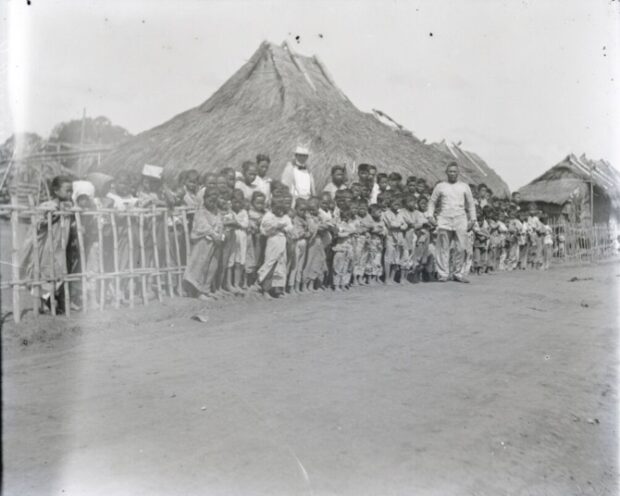
After World War II, the United States emerged as the dominant imperial force, supporting dictatorships, military regimes, anti-communist campaigns, and counterinsurgency wars across Asia, Africa, and Latin America. Fascism persisted not despite liberal democracy but often alongside it—through military alliances, sanctions, anti-terror laws, covert operations, and client states tasked with suppressing revolutionary movements.
Today, these dynamics assume new technological and geopolitical forms.
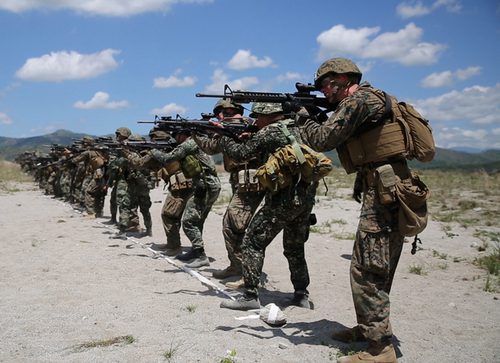
As U.S. hegemony confronts mounting contradictions, military dominance increasingly compensates for economic strain. From Palestine to Lebanon, from sanctions regimes to the widening war on Iran, a reiteration of the Monroe doctrine inflicted upon Venezuela and Cuba militarization appears less as exception than governing logic. The Philippines, through expanded EDCA sites, Balikatan exercises, missile deployments, and growing military interoperability, is being drawn more deeply into the strategic geography of the South China Sea and Taiwan Strait.
What distinguishes the present conjuncture is that militarization increasingly converges with surveillance, logistics, and technological dependency. Under the proposed Pax Silica, imperial domination is reorganized through data infrastructures, AI-assisted targeting systems, digital supply chains, and military interoperability. Pax Silica as emerging form of techno-fascist imperialism no longer relies solely on occupation or conventional economic extraction. It increasingly operates through algorithmic surveillance, predictive targeting, militarized logistics, and strategic technological dependence.
The Philippines is increasingly repositioned not only as a forward operating terrain for U.S. strategic projection but also as a logistical and technological node within its so-called Indo-Pacific restructuring. Projects such as the Luzon Economic Corridor, framed in the language of modernization and resilience, deserve closer scrutiny. What appears as development increasingly unfolds alongside strategic subordination, military integration, and supply-chain dependence calibrated to foreign geopolitical priorities.
This contemporary moment makes Sison’s Philippine framework especially revealing.
For Sison, fascistic tendencies in the Philippines cannot be understood apart from the country’s three enduring social problems: imperialism, bureaucrat capitalism, and feudalism.
Imperialism sustains military and economic dependence; feudal relations reproduce chronic landlessness and rural inequality; and bureaucrat capitalism converts public office into private accumulation for competing dynasties and elite factions. In this sense, recurring corruption scandals, Senate fiascos, impeachment crises, and elite infighting reveal not democratic malfunction but the instability of a ruling order fractured by rival interests while remaining united in preserving structural inequality.
At the same time, these contradictions increasingly converge with militarization.
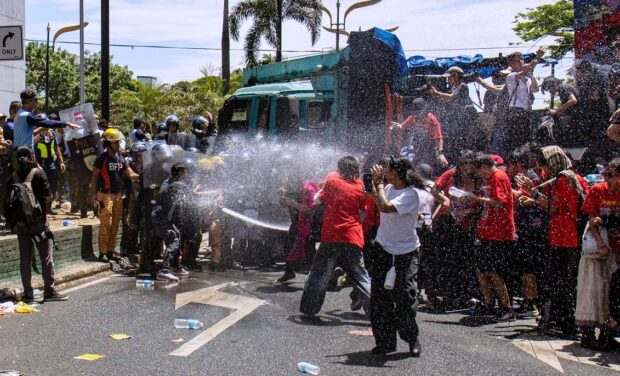
The same state mired in corruption deepens military integration through Balikatan, EDCA expansion, and alliance structures normalized in the language of defense cooperation and disaster preparedness. What is rehearsed externally through missile interoperability and regional military exercises becomes internalized through counterinsurgency. Intelligence systems, surveillance architectures, and security doctrines developed through alliance frameworks increasingly turn inward against peasants, Indigenous peoples, labor organizers, activists, and revolutionary movements.
This is why fascism in countries like the Philippines cannot be understood apart from class war.
The horrific massacre of 19 revolutionaries and activists in Toboso, Negros reminds us that fascism is never merely abstract. Counterinsurgency does not simply emerge from security concerns. It secures the social order necessary for land monopoly, extractive development, militarized governance, and foreign strategic priorities. State violence against dissenting communities is not anomaly. It is political economy in a semi-colony of the US made visible.
One need not agree with every geopolitical assessment Sison advances to recognize the enduring force of his central argument: fascism cannot be understood apart from imperial crisis, class power, and the organized violence required to preserve an unequal order.
If I may put Sison’s deepest provocation simply, it may be this: fascism is not history returning from the dead. It is crisis searching for political form.

This is why Little Book on Fascism and How to Fight It matters now. It compels us to recognize fascism not only in the spectacle of strongmen, but in the normalization of militarization, surveillance, permanent war, dispossession, techno-imperial control, and the criminalization of dissent. It asks us to see the connections between missile systems and massacres, between foreign military access and domestic counterinsurgency, between elite corruption and deepening repression.
And perhaps most urgently, it reminds us that history does not simply collapse into catastrophe. Every imperialist escalation sharpens the contradictions it seeks to contain. The same crises generating war and repression also generate resistance.
To read Sison today is therefore not only to study fascism. It is to confront a question history repeatedly places before oppressed peoples: whether fear will consolidate domination—or whether collective struggle will once again make another future possible. #