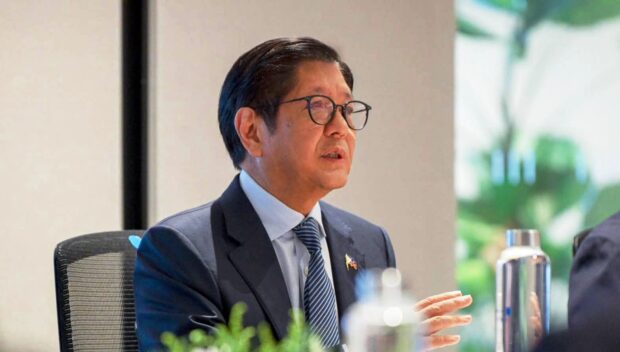
Bayan Muna asked Pres. Ferdinand Marcos Jr. to cancel the joint venture agreements (JVA)of local water districts with distribution giant PrimeWater, calling the contracts “onerous” and violations of the Constitution and laws of the country.
Former Rep. Ferdinand Gaite and affected consumers from several cities across the country trooped to Malacañang this morning to personally submit their urgent petitions calling for the cancellation of Primewater’s JVAs with water utilities.
“We are filing this complaint because PrimeWater’s horrendous service and unjust rates are unacceptable. Water is a basic human right, not a profit-making commodity for oligarchs,” Bayan Muna said.
Instead of directly taking over local water districts as was the case with Maynilad and Manila Water in the greater Manila area in the 1990s, the JVAs allow private companies such as PrimeWater to profit from water distribution while insulating themselves from actual liabilities and direct responsibilities, the agreement’s opponents have repeatedly explained.
Former Rep. Carlos Isagani Zarate in a statement said: “The privatization of water through these JVAs has only brought higher prices and poorer service to our communities. It’s time to prioritize the welfare of the Filipino people over corporate profits.”
Gaite added: “The numerous grievances from residents—frequent water interruptions, poor quality, and exorbitant charges—are clear evidence that these agreements are detrimental to public health and welfare. We demand that all these JVAs be rescinded immediately.”
Officers of the Bacolod Employees Union and Amlig Tubig also submitted a petition to Pres. Marcos against PrimeWater this morning.
Bayan Muna’s action stems from longstanding issues associated with PrimeWater’s operations, particularly in areas like San Jose del Monte, Bulacan, where residents have complained of unreliable water supply, contaminated water, and exorbitant rates.
Other consumers from Lucena City and Bacolod City narrated similar complaints in a Bayan Muna press conference in Quezon City last Tuesday.
Earlier, Pres. Marcos ordered the investigation of PrimeWater, owned by the country’s richest family, the Villars.
The order came after Senate hopeful Camille Villar was endorsed by Marcos’ erstwhile political-ally-turned-enemy Vice President Sara Duterte.
Camille was originally part of the fragmenting Alyansa para sa Bagong Pilipinas slate of the Marcos camp.
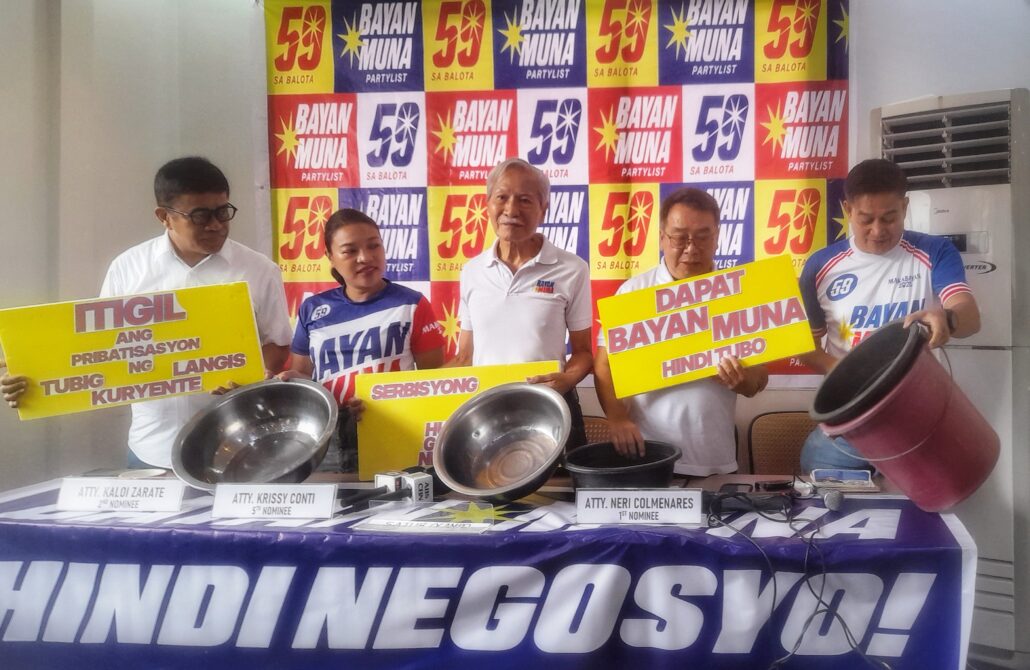
But Bayan Muna insisted that apart from political bickering among the country’s political elite, it is the responsibility of the government to provide the people with clean, reliable and affordable water.
Since the inception of the JVAs in 2018, these have violated Philippine laws and the Constitution,” former Rep. Neri Colmenares explained.
“They breach the Provincial Water Utilities Act, the principles of public trust, and our right to affordable water. The government complaints have mounted, yet government action has been inconsistent and insufficient,” Colmenares pointed out.
The government must immediately act to revoke these unjust contracts and bring water back to the people, he added.
In its petition, Bayan Muna called on Pres. Marcos Jr. to issue an executive order to cancel all onerous JVAs and instruct the Local Water Utilities Administration to take back full management of affected water districts, and launch a thorough investigation into how these agreements were approved.
“The privatization of water is a neoliberal policy that prioritizes profit over people’s welfare. We are calling for a reversal of these policies and the immediate return of water services to public control,” Gaite said.
They also urged the public and various sectors to stand together in resisting the ongoing privatization of crucial utilities.
“Water is a public good, and it should remain in the hands of the people. Hindi ito negosyo para sa iilan; ito ay karapatan ng bawat Pilipino,” Zarate emphasized.
“We call on the Marcos administration to act swiftly, to protect the Filipino people from the greed and neglect of private corporations. The responsibility to provide safe, affordable, and reliable water lies with the government,” Colmenares concluded. # (Raymund B. Villanueva)