By Rosario Brenda Gonzalez
This is a story of a poor peasant child whose rise to prominence is significantly tied to the EDSA People Power uprising that concluded 39 years ago today.
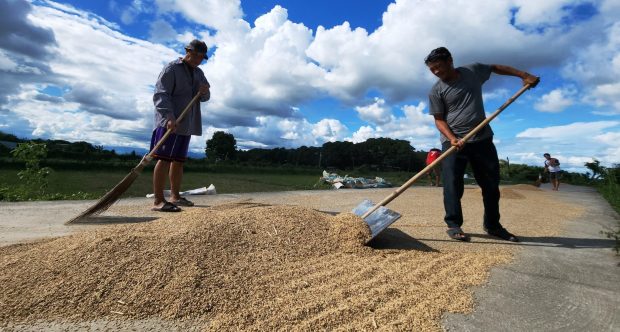
Mody’s recollections of what EDSA means to him begins in the land of his birth where his father reared him and his elder sister amidst lush forests. Their abode was in an abandoned land that they made productive with their bare hands. It had a lake where they cast nets before the sun set that they checked for fish early the following day. Their small farm produced rice and vegetables, often sold in Sta. Cruz, Laguna, a good two and a half hours away from home.
Travelling to Sta. Cruz had always been an adventure for Mody. They would ride a motorized banca to reach the provincial center to sell their bananas and sweet potatos. In those trips, he and his sister would be treated to a carinderia meal and a Fernando Poe Jr. movie. His father was an avid fan of The Kings’s films, admiring the often heroic and people’s defender roles portrayed in them. Before returning home, they would buy dried fish and onions, the mainstay of their vegetable fare. Those trips would be their highlight of the month.
For home entertainment, Mody’s family listened to the songs of Victor Wood, Eddie Peregrina, Imelda Papin and Claire dela Fuente. Mody has always been partial to Original Pilipino Music (OPM). “Madaling maintindihan – may kaugnayan sa buhay. Nagkakahiwalay, pinagtataksilan.” (Easy to understand – relatable to our lives. Separations. Betrayals.)
Victims of Martial Law
Their hard but peaceful existence was shaken hard by the declaration of Martial Law on September 21, 1972. Philippine Constabulary (PC) troopers rounded up peasant families in the Cavinti-Kalayaan, including Mody’s. Suspected of being sympathizers of the New People’s Army (NPA), they were then subjected to limited movements in their village. Community members received occasional beatings and threats.
After several days, the PC elements arrested Mody’s father Rogelio. He was enslaved as a cook for the soldiers for some time. Inside camp premises, Rogelio saw the military men steal sacks of rice, vegetable and farm animals from the poor farmers. A food blockade was also enforced, making the families even hungrier. For half a year, their village became a hamlet.
When the military finally left their village, Mody’s family and relatives heaved a huge a sigh of relief but remained cautious about their situation. They knew that with Martial Law, they can again be subjected to similar human rights abuses anytime.
Mody as political prisoner
When Mody became a young adult 10 years later, in 1983, it was Mody’s turn to personally suffer injustice. He was unjustly arrested for subversion and illegal possession of firearms. But rather than feeling destitute, he consoled himself by thinking that, at least, his relatives were spared from the persecution. Victims of injustice, Mody’s relatives by then have organized themselves to defend their farms from land-grabbing by rich and powerful landlords. It was Mody who got arrested and charged in behalf of their entire clan.
In prison in Camp Guillermo Nakar in Lucena City, Mody met and became friends with other political prisoners. There, he met Ma. Salome “Sally” Crisostomo-Ujano who he credits as the person who taught him to read and write. As he had to work at an early age, Mody failed to focus on his education. It was only in jail that he had the time to study and improve his literacy. It was Sally, convicted of rebellion in 2024, who helped him achieve what is taken for granted by many but denied poor peasant children like Mody. Sally is a respected child rights advocate and women’s rights leader.
Mody endured political imprisonment for three long years, corresponding to the last years of the Marcos dictatorship. From what little news that reaches them, they cheered for the ever-growing protests against the dictator that led to the strongman’s downfall in 1986.
When the EDSA people power uprising occurred Mody and the other political prisoners were triumphant. Prior to this, they were already protesting against the Marcos dictatorship in jail, recognizing the inspiration and sterling example of the people’s martyrs who came before them. When political repression was at its height during the Marcos years, they were those who dared oppose the dictatorship and paid for it with their lives.
From jail to the streets
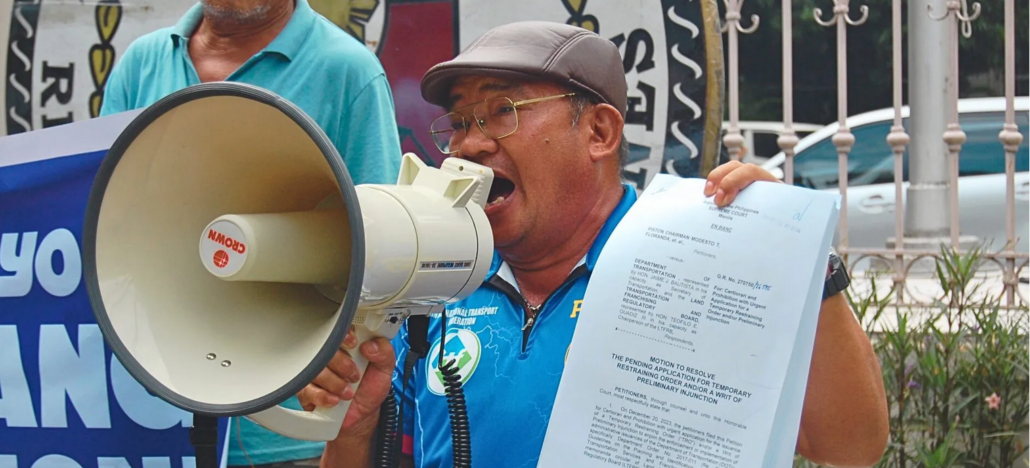
Mody was lucky to survive Martial Law and were among those hundred of political prisoners released by the government that replaced the dictatorship. From jail, he first joined human rights organizations. He then became a staff for the women’s organization Gabriela and the Bagong Alyansan Makabayan. He later became a jeepney driver where he again experienced the injustices poor people suffer, prompting him to become a transport sector organizer.
Mody rose to become a leader of PISTON, the country’s biggest and most progressive national federation of jeepney drivers, eventually becoming its national president. He is now known as the leader who is leading the defense of their livelihood from being grabbed from under them by big business.
Today, Mody is among the 11 Makabayan bets for the Senate, a slate of people’s leaders from various sectors.
Recalling his childhood makes Mody wistful. But he never forgets the horrors of the dictatorship that made his family suffer. He realizes that an oppressive economic and socio-political system remains, compelling him to remain an activist and a human rights defender.
As a poor young boy who cast his net beside his father in a remote lake in the mountains of Laguna, Mody Floranda never imagined he’d be casting his net for votes for the Senate. This time, however, it would not simply be for physical nourishment but for fellow transport workers who have come to look up to him as a steadfast and principled leader, the kind portrayed in many FPJ movies he watched as a child. #