The shooting is at least 7,000 kilometers away from the Philippines but the war in West Asia is already impacting the country in dire ways.
Filipinos are bracing for a series of significant price hikes on petroleum products as a direct result of the war in the region where its oil requirements come from.
Oil companies announced a P1.90/liter spike in gasoline prices, P1.20/liter in diesel and P1.50/liter in kerosene prices starting Tuesday (March 3). The Philippines adjusts its petroleum products prices weekly and implements them on Tuesday mornings.
Department ofEnergy-Oil Industry Management Bureau director Rino Abad on Monday predicted a cumulative increase of at least P3.00 for petrol should hostilities in the Middle East fail to de-escalate in the coming weeks.
Tomorrow’s price increases would be the ninth consecutive week that petrol and 10th consecutive time that diesel and kerosene prices will increase, hiking their prices by at least P8.00 since the start of the year.
Huge oil importer
The Philippines relies heavily on oil products from West Asia for its transportation and energy requirements, importing roughly 86% to 92.5% of its crude oil from Western Asia.
Saudi Arabia is the primary supplier, accounting for nearly 45% of total crude imports, followed by the UAE. The country imports over 99% of its total oil requirements.
Iran’s declaration of the Strait of Hormuz as a no sail zone since Sunday would impact on the Philippines’ supply of petroleum products, Abad admitted.
He said that the Philippines only have a 30-day buffer supply of petrol and 26 days of diesel.
Abad said Filipinos have to accept the fact that oil prices would only increase in the near future unless the war in Western Asia de-escalates soon.
At least three oil tankers have been attacked in the strait since Sunday, sparking greater fears of greater and more prolonged oil price hikes in the coming weeks.
Fare hike or less tax?
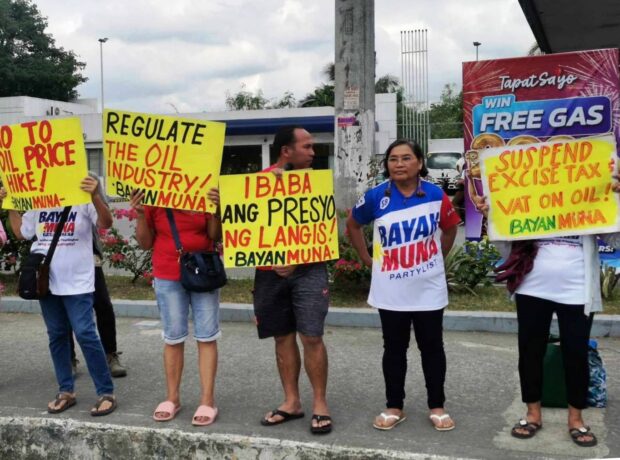
Meanwhile, transport groups reiterated their demand for a P1.00 increase in fare prices for local public transportation.
The Philippine Land Transportation Franchising and Regulatory Board promised to look into their petition more seriously starting today, acknowledging the effects of the war in the Middle East.
There are alternatives to fare hikes or meekly accepting oil price increases, however, the country’s largest transport group said.
The Pinagkaisang Samahan ng Tsuper at Operator Nationwide (PISTON) said President Ferdinand Marcos Jr. should stop his government’s collection of excise tax on petroleum products.
The proposal, PISTON said, is a safeguard against fare hikes and general inflation brought about by unabated oil price increases.
The government imposes P6.00 in excise taxes on oil products, earning P400 billion annually.
Opposition senator Francis Pangilinan agrees with PISTON, saying the ongoing conflict in the Middle East and its effects on oil prices is the opportune time to review its imposition of the tax.
The Marcos Jr. government flatly rejects the demand, saying it needs the revenue to fund its social service programs.
Critics however pointed out that the government may do away with the tax if it stops massive corruption such as the flood control scandal rocking the Marcos Jr. administration. # (Raymund B. Villanueva)