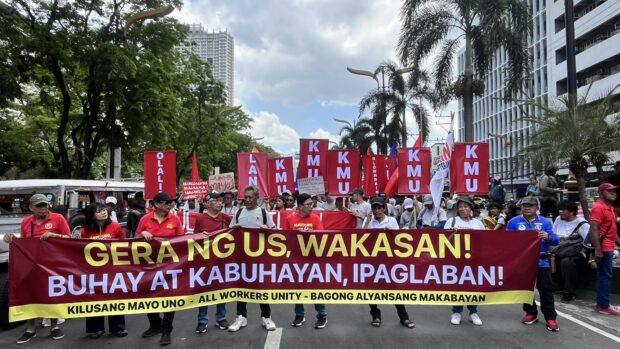
The largest Catholic university in the province of Nueva Vizcaya has condemned all forms of corruption and rejected destructive mining activities in Nueva Vizcaya, calling both moral evils that undermine justice and damage the environment.
In a statement released on October 27, Saint Mary’s University (SMU) of Bayombong said “corruption is evil in every shape or manner,” warning that corruption destroys public trust, weakens institutions, and fuels a culture of cynicism and hopelessness.
“Corruption destroys public trust and weakens government institutions by undermining public offices, causing them to serve personal or political interests rather than the people,” the university said.
“As a result, both Filipinos and foreigners lose faith in leaders, the justice system, and even in the possibility of change,” it added.
In solidarity with the Diocese of Bayombong, the SMU community has committed to actively denouncing and rejecting corruption, which, it said, is a “core evil that perpetuates injustice and degrades the natural world.”
‘No To Mining’ Stand
The nearly century-old institution linked corruption to environmental destruction, citing illegal and destructive mining as among the gravest forms of exploitation.
It said such activities “invade upon the ancestral domains and rights of indigenous communities” that have long acted as stewards of the environment in the province, as the “watershed haven” of Cagayan Valley.
“Corruption of the environment leads to the misappropriation of natural resources, mining, and pollution,” the university said, adding that its renewed ecological commitment is rooted in Laudato si’, Pope Francis’ encyclical on care for creation.
The statement comes amid renewed debate over mining operations in Nueva Vizcaya, particularly in the towns of Kasibu, Quezon and lately Dupax Del Norte, where foreign-owned, large-scale extractive projects have drawn strong opposition from residents, Church leaders, and environmental groups.
Foreign Mining Siege
Australian firm OceanaGold Philippines, Inc. operates the gold-copper mine in Didipio, Kasibu town, while British firm FCF Minerals Corp. is extracting gold and molybdenum in Runruno, Quezon town.
The province has once again become the flashpoint of a mining dispute following attempts by another British firm, Woggle Corp. to resume its exploration activities in Bitnong, Dupax Del Norte town.
SMU also vowed to oppose destructive mining activities that, it said, cause massive excavation, land instability, and the exploitation of local communities.
The university further pledged to work with government leaders and local communities to promote ecological education and ethical governance, and to implement sustainable practices aimed at ensuring transparency, protecting human rights, and promoting long-term environmental stewardship.
SMU reaffirmed its mission to uphold Christian values of “communion, excellence, innovation, and social responsibility,” adding that every act of corruption runs counter to these principles.
Quoting the Book of Genesis in underscoring the moral and spiritual foundation of its environmental advocacy, the university statement said:
“God looked at everything he had made, and found it very good.”
Founded in 1928 by the Congregation of the Immaculate Heart of Mary (CICM), SMU serves thousands of students in Cagayan Valley and has long been active in social and ecological causes in partnership with the local Church. #