By Carlos Isagani Zarate
Before they were recruits or scholarship athletes, Rene Clert Baterbonia and Chukwuemeka Divine Avili were dutiful sons.
One was raised in the struggling community of Talacogon, Agusan del Sur. The other crossed an ocean from Nigeria, carrying the hopes of a family that believed basketball could change their future. Both were also known as “gentle giants.”
Like countless young athletes from poor families, they believed talent, discipline, and sacrifice would open doors kept shut by poverty.
For them, sports is a rare path to food on the table, education, and a better future. Rene, 19, and, Divine, 21, understood that. Their talent earned them athletic scholarships at Ateneo de Manila University, one of the country’s most prestigious institutions.
They trusted the promise. Last week, that promise ended in tragedy.
During what was reportedly a team-building activity—a “break the men” ritual and “band of brothers” rite of passage—at a beach resort in Dipaculao, Aurora Province, both young men drowned.
Two lives ended long before their time. Two families were left shattered. Two communities lost sons they had invested their entire futures in.
That is the tragedy at the heart of this story.
Everything else—the official statements, the public outrage, the demands for accountability—begin there. These deaths force us to look at a sports culture that puts winning and endurance above human life. We deserve real answers about who was watching, what safety rules were in place, and how this was allowed to happen.
Yet the tragedy did not end with the drowning. The cruelty of this loss became even more apparent in the disturbing days that followed.
The families of the victims reportedly learned of their sons’ deaths through social media rather than through direct communication from university officials.
Imagine that: a mother discovers that her child is dead not through a personal call or the careful words of a responsible institution, but through posts and comments circulating online. No parent should ever receive news that way.
Rene’s mother, Rovelyn, publicly showed her righteous outrage. She was not speaking as a lawyer or a sports analyst; she spoke as a mother whose world had collapsed. In public interviews, she repeatedly asked: “Bakit ganoon ang nangyari sa anak ko?” It was a cry of grief from a parent trying to understand how a healthy young player—whom just days ago she hugged tightly while sending him off at the Davao airport—left his home chasing a dream and returned in a coffin. The basketball prodigy from Mindanao is gone.
Her frustration over the gaps in information provided to the family was palpable, compounded by the reality that news of the tragedy had already spread online while loved ones were still searching for answers.
The pain was no less devastating for the family of the 6-foot-10 frame Divine in Nigeria. The “gentle giant” Divine was more than a student-athlete; he was hope carried across continents. Divine’s death did not merely extinguish a life; it extinguished possibilities and sacrifices made by people thousands of miles away who had entrusted him to an institution that promised opportunity and care. It was not a divine design.
These are the voices missing from the carefully crafted statements issued in the aftermath. Behind every legal disclaimer stood a mother, a brother, a friend, demanding answers. Behind every public relations release stood families trying to understand why two young men who were recruited, supervised, and entrusted to a university never came home alive.
Ateneo is a Jesuit institution that proudly embraces cura personalis—care for the whole person—a principle meant to place human dignity at the center of education. In moments of crisis, values are not measured by mission statements or campus banners. They are measured by how it responds timely, rightfully.
To many, the university’s initial response was deeply disappointing. Instead of immediately comforting grieving families, their public statements felt cold, defensive, and apparently engineered to limit liability. For the head coach to tell people to “move on” while Rene and Divine are still being mourned is cold, profoundly insensitive.
The disappointment, the anger voiced by many is not merely about what was said. It was about what appeared to be missing: compassion.
That absence reveals a deeper problem.
Modern collegiate sports increasingly operate within a commercial ecosystem. The aggressive recruitment, heavy sponsorships and massive TV revenue have turned winning into a valuable commodity. In this high-stakes environment, athletes cease to be students first and they become corporate investments. Their performance brings visibility, and their victories fuel a system that generates enormous benefits for schools and sports programs. The language may still be educational, but the incentives are corporate.
This issue is magnified when recruitment targets economically vulnerable youth. For these athletes, a scholarship is a rare lifeline for their families; failing means returning to poverty. This dynamic creates a massive, unfair power imbalance.
A young athlete dependent on a scholarship is less likely to question unsafe conditions or excessive demands. The dream itself becomes leverage.
That is why institutions bear a heightened duty of care. Universities are not professional sports franchises, and student-athletes are not paid employees whose risks are compensated by multimillion-peso contracts. Schools stand in loco parentis. They assume responsibility for young people entrusted to their care, a responsibility that does not disappear during off-campus activities.
The central question is not whether athletic programs should strive for excellence. They should.
The question is whether victory has become more valuable than safety.
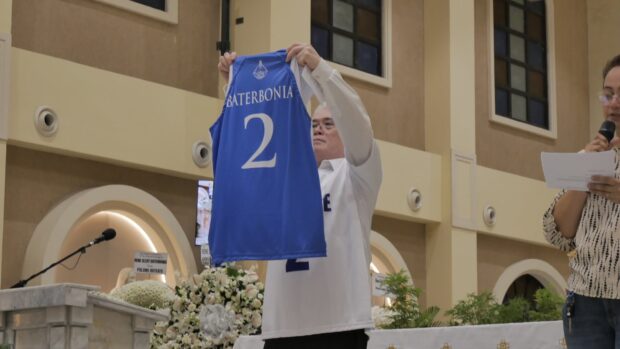
What makes this tragedy even more alarming is that it exposes a broader gap in our laws. The Philippines lacks a comprehensive legal framework that fully protects the rights of student-athletes.
Since regulations are fragmented, oversight is weak and accountability mechanisms are uncertain, tragedies are treated as isolated incidents rather than structural flaws. Without stronger protections, the systemic pressures that caused this loss will remain. Poverty will keep supplying that dream. The sports industry will keep consuming it.
Not everyone within Ateneo, though, met the tragedy with silence or legal defensiveness. The larger community—faculty, alumni, and students alike—united in sorrow and a demand for accountability. They aren’t asking for much: just a rigorous investigation, absolute transparency from officials and coaches, and an immediate overhaul of safety protocols.
They were reminding Ateneo that fidelity to cura personalis is tested not during moments of triumph, but during moments of failure. Those voices deserve to be heard.
Yet, tragedy also attracts opportunists. The deaths of Rene and Divine have already become raw material for political grandstanding and social media spectacle. Some have rushed to exploit the grief of the families to gain visibility or political advantage.
Such conduct is no less offensive than institutional indifference.
There is something deeply parasitic about those who arrive like mercenaries after the battle has been lost, harvesting outrage for personal gain while rarely sitting quietly with the living who must endure the loss.
The families of Rene and Divine deserve facts instead of rumors, accountability instead of performance, and compassion instead of opportunism.
The living deserve dignity. The dead deserve truth.
Rene and Divine deserved more than condolences after their deaths; they deserved protection while they were alive. Their names should force a reckoning with a system that too often celebrates athletes when they win and forgets them when they become inconvenient.
An athletic scholarship is supposed to be a bridge to a better future. If institutions cannot guarantee the safety and dignity of the young people who carry their banners, then that bridge becomes something else entirely.
Not a path out of poverty, but an admission price paid by the poor. #
= = = = = =
Carlos Isagani Zarate is a Mindanao-based public interest lawyer and former 3-term member of the House of Representatives representing the Bayan Muna Partylist. An alumnus of the Ateneo de Davao Law School, he is currently the Senior Legal Advisor of the Klima Center of the Manila Observatory and Senior Partner of the La Vina Zarate and Associates (LVZ Law).