By May Martin
CEBU, Philippines — At 9:59PM on September 30, the ground in northern Cebu shook with terrifying force. A magnitude 6.9 earthquake — its epicenter just 17 kilometers northeast of Bogo City — sent thousands of residents rushing out of their homes into the dark. Within seconds, buildings cracked, walls fell, and the landscape of one of Cebu’s northernmost cities was reshaped.
By sunrise, the scale of the disaster became clear. Sixty-three people were confirmed dead. Dozens more were injured and entire families displaced. The figures are stark. Initial reports said 30 perished in Bogo City, 12 in Medellin, 20 in San Remigio, and one in Tabuelan.
Bogo at the Center of the Disaster
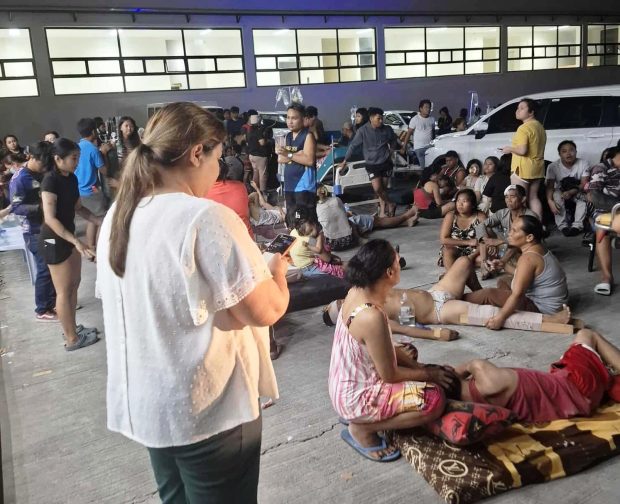
Bogo bore the brunt of the quake’s violence. Concrete roads fractured, electric poles toppled, and a local fire station partially collapsed. Hospitals, already limited in capacity, were pushed beyond their limits. Patients with fractures and head injuries spilled onto parking lots where doctors and nurses worked under floodlights, improvising triage centers in open air.
Commercial strips in downtown Bogo lost entire shops while older residential neighborhoods saw walls and roofs pancaked into rubble. Power outages plunged many barangays into darkness, and broken water lines cut supply in others.
For families who had just begun rebuilding from recent storms, the quake was another cruel setback. “We lost our home in the typhoon two years ago,” said one survivor. “Now, our house is gone again. I don’t know how much more we can endure.”
Neighboring Towns in Mourning
The surrounding municipalities of northern Cebu fared no better. By 11AM, the Department of Health has recorded 63 casualties with 30 fatalities in Bogo. In Medellin, 12 residents died when ceilings collapsed in a barangay gymnasium. San Remigio reported 20 fatalities, including Coast Guard personnel and a firefighter who were trapped when a sports facility caved in.
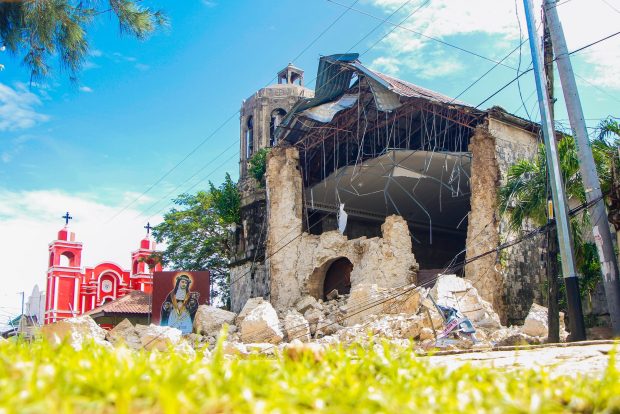
Tabuelan, a coastal town, reported one casualty and reported landslides that cut off smaller villages. In Daanbantayan, the historic Archdiocesan Shrine of Santa Rosa de Lima sustained cracks on its century-old walls, another reminder of how disasters strip not just lives but heritage.
Provincial Government in Crisis Mode
The Cebu Provincial Government, led by Governor Pamela Baricuatro, swiftly declared a state of calamity in San Remigio and other hard-hit municipalities. This move unlocked emergency funds, fast-tracked procurement, and allowed immediate relief operations.
The Joint Operations Center was activated overnight, coordinating engineers, health personnel, and social workers. Provincial engineers fanned out to inspect lifeline infrastructure — roads, bridges, and schools — while the Provincial Health Office mobilized trauma teams and psychosocial support for evacuees.
“We are in full crisis mode,” Baricuatro said. “Our priority is to save lives, restore access, and provide shelter and care for those displaced.”
Troops and Rescue Teams Rush to the North
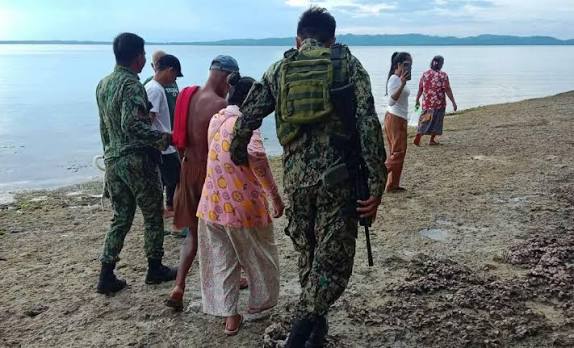
Recognizing the scale of the disaster, national forces joined the effort. Over 1,300 police officers were deployed to Bogo, Medellin, and San Remigio to assist in search-and-retrieval missions, enforce order, and secure relief convoys.
Military engineers arrived with heavy equipment to clear debris, reopen blocked highways, and stabilize bridges critical for relief supply lines.
The Philippine Coast Guard dispatched BRP Teresa Magbanua, loaded with doctors, nurses, and emergency supplies, to reinforce the medical response in the north of the island.
Despite reinforcements, rescuers face perilous conditions. Repeated aftershocks have forced teams to pull back from unstable ruins. Landslides in upland barangays make road access difficult, leaving helicopters and boats as lifelines for some communities.
Metro Cebu: Support Hubs Mobilized
Further south, Cebu and Mandaue cities have taken precautionary steps, suspending Classes and non-essential government work while structural inspections are being conduted.
Cebu City hospitals, including the Vicente Sotto Memorial Medical Center, admitted dozens of patients transferred from Bogo and Medellin. Trauma surgeons and orthopedic teams were deployed north.
Mandaue City mobilized its disaster risk reduction office, social welfare staff, and health units to ready evacuation centers and psychosocial support programs. It also became a logistics hub, warehousing relief packs and coordinating supply convoys headed for the north.
Lives in the Balance
Across northern Cebu, families camp out in fields and roadside clearings, too afraid to return to cracked homes. Evacuation centers fill with children, the elderly, and the displaced. Community kitchens, often powered by volunteers, are keeping families fed while they wait for relief goods.
In Bogo, one mother cradled her injured son outside the overcrowded provincial hospital. “We’ve been here all night,” she said. “We just need medicine and water.”
Beyond the Quake: The Politics of Disaster
While emergency operations dominate the headlines, the quake has reopened deeper conversations about governance.
Critics argue that corruption in local infrastructure projects from substandard building materials to unmonitored construction permits has made many communities more vulnerable to disasters.
At the same time, chronic flooding in Metro Cebu, blamed on weak enforcement of zoning laws, illegal reclamation, and clogged drainage, highlights how poorly planned urban growth compounds the effects of natural disasters.
For residents, the earthquake feels like more than a natural catastrophe. It is also an indictment of the systemic failures that leave ordinary Cebuanos at the mercy of every calamity.
Rebuilding Amid Broken Trust
As the death toll rises and the search for survivors continues, the bigger question looms: Will Cebu rebuild stronger, or simply rebuild the same vulnerabilities?
Reconstruction will take months, if not years. Roads and bridges must be repaired, homes reconstructed, and hospitals reinforced. Yet unless true issues are addressed and climate resilience taken seriously, many fear Cebu will remain caught in a cycle of disaster, relief, and loss.
For the families mourning in Bogo and beyond, recovery is about more than replacing roofs and walls. It is about demanding accountability, securing safety, and breaking free from the failures that made this tragedy so devastating. #