President Ferdinand Marcos Jr. issued an energy emergency declaration on Tuesday, finally admitting the Philippines is under an oil price crisis brought about by the war in West Asia.
Marcos on Tuesday issued Executive Order No. 110 placing the Philippines under a “State of National Energy Emergency” even as his government had been downplaying the effects of the runaway oil price hikes since February 28.
Mere hours before Marcos’ issuance, his Cabinet members were united in saying the Philippines’ fuel stock remains at a “comfortable level.”
In his declaration, Marcos said the US/Israel war against Iran had created uncertainty in global energy markets, “thereby posing a threat to the country’s energy security.”
“The declaration of a state of national energy emergency will enable the government … to implement responsive and coordinated measures under existing laws to address the risks posed by disruptions in the global energy supply and the domestic economy,” he said.
Marcos’s national energy emergency declaration, however, has little to do with lowering pump prices of fuel. Rather, it sticks to its strategy of offering financial aid to certain sectors as well as aid packages for “Livelihoods, Industry, Food, and Transport.”
Marcos added a committee has been formed to ensure the orderly movement, supply, distribution and availability of fuel, food, medicines, agricultural products and other essential goods.
The state of national energy emergency will remain in effect for one year.
‘Which is which?’
The declaration, however, contradicted official pronouncements that Marcos’ government sees no need to declare an emergency.
In a press conference on Tuesday, Department of Energy secretary Sharon Garin also told reporters the country has at least 38 days worth of supply, along with refined petroleum products like diesel, petrol and kerosene.
Senators Win Gatchalian, Bam Aquino and Risa Hontiveros however asked the president to recognize the existence of a crisis in order to effectively strategize on government interventions for the most affected sectors.
Organizations also called for the revocation of the oil deregulation law for the government to retake control of the oil industry and control pump prices of petroleum products
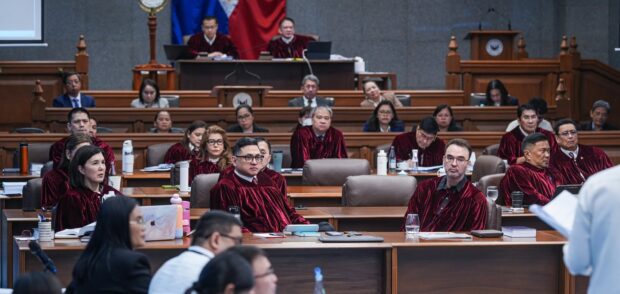
In a hearing on Tuesday, Department of Energy undersecretary Sandy Sales said they asked the Senate for another measure for the Philippine National Oil Corporation to use funds to buy source oil products abroad but Congress had already started its Holy Week break.
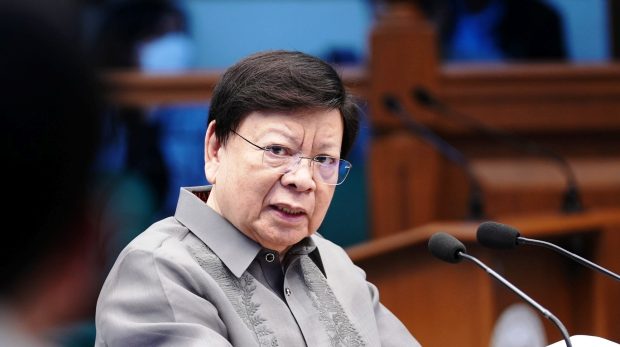
The remark sent a usually calm Senator Loren Legarda ballistic, saying the Senate should not be blamed for government’s late request, pointing out that it was the Executive Branch which had been dragging its feet in seeking solutions to the crisis.
Legarda reminded that the President’s “certified urgent” pieces of legislation were in fact passed by both Houses of Congress before its scheduled recess.
Bolting to her feet in anger, Legarda pointed out that it is Marcos who first requested emergency powers to suspend oil excise taxes which, when passed, is being set aside by the president himself.
Legarda also cited that Congress approved the temporary importation and sale of Euro 2 diesel fuels as a stop gap measure against supply constrictions brought about the closure of the Strait of Hormuz.
“So, which is which? Tell us what you need, we will do it. But never accuse us of taking a break without doing our job!” she fumed. # (Raymund B. Villanueva)