It has yet to operate a repatriation flight of its own, but the Department of Migrant Workers (DMW) is already asking for additional funds for the increasing number of Filipinos wanting to go home from war-torn Gulf region.
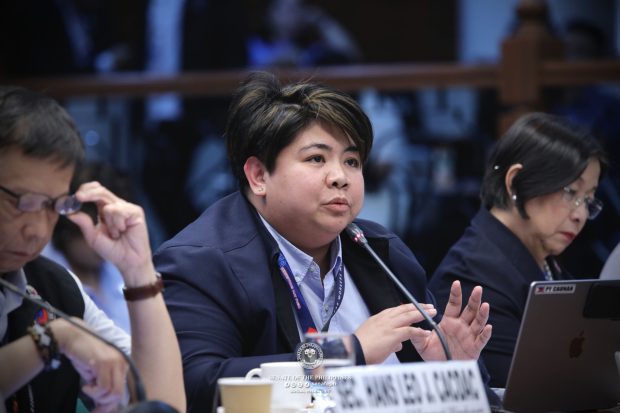
During a Senate hearing on Friday, DMW secretary Hans Leo Cacdac told lawmakers that while the department’s current funds can support existing repatriation requests, additional funds would be necessary if more returning overseas Filipino workers (OFWs) ask for assistance.
With only a few dozen OFWs provided with some form of assistance since the US and Israel started their war against Iran a week ago, Cacdac said the DMW can live with its current budget based on the current level of repatriation events.
On Friday, Cacdac welcomed 34 OFWs at the Manila International Airport, the second batch of returning Filipinos whose flights were delayed by the closure of airs paces in the Gulf region.
DMW, however, clarified that the workers bought their own tickets as they were scheduled to fly back home before hostilities started.
As of March 4-5, 2026, as many as 1,416 OFWs have requested repatriation due to escalating regional tensions in the region. The Philippines currently implements a voluntary Alert Level 3 status on repatriations.
“[I]n a worst-case scenario, yes, we would need supplemental funding,” Cacdac told the joint hearing of the Senate Committee on Foreign Relations and the Committee on Migrant Workers.
Overseas Workers Welfare Administration (OWWA) administrator Patricia Yvonne Caunan said the government’s Emergency Repatriation Fund (ERF) stands at about PHP1.5 billion.
OWWA said that based on its simulations, mass evacuation of OFWs from the region could cost up to PHP3.67 billion if the crisis continues to escalate.
Caunan said repatriating one OFW could cost around PHP150,000 that covers transportation, welfare assistance and logistics until the worker reaches home.
“With around 2.4 million Filipinos in the Middle East, if just 1 percent request repatriation, that would be about 24,000 people,” Caunan said.
She added that such a scenario could create a funding gap of about PHP2.2 billion beyond the current ERF allocation.
The officials said the Philippine government is now studying possible funding sources, including its contingency fund and potential savings from other agencies.
At the hearing, Senator Win Gatchalian stressed that the welfare and safety of OFWs must be the country’s foremost foreign policy priority as the Gulf region conflict continues to escalate.
Gatchalian warned that the rapidly changing situation on the ground has left many OFWs anxious, with families back home relying only on news and internet reports for updates.
Beyond humanitarian concerns, Gatchalian also underscored the economic stakes.
Second only to North America, the Middle East contributes around ₱372 billion in annual remittances to the Philippines. # (Raymund B. Villanueva)