Despite claiming to be civilized for the past 5,000 years, China’s behavior in the South China Sea (SCS) and its persistent violent conduct in Panatag Shoal as well as the recent attack on a Filipino soldier demanding that Chinese Coast Guard personnel stop dumping cyanide near a Philippine ship at Ayungin Shoal indicate richly that Beijing isn’t practicing what it preaches about being diplomatic, even-handed and abiding by international law and the provisions of the UN Convention on the Law of the Sea (UNCLOS.)
China has disregarded the July 12, 2016 arbitral award of the Permanent Court of Arbitration (PCA) that rejected China’s historical claim on Panatag Shoal and other maritime features in the SCS despite signing UNCLOS and solemnly swearing to abide by its provisions. Like the insane declaration of Rodrigo Duterte that the award was a mere “scrap of paper,” China dismisses the verdict as a “political” ruling that is void under international and Chinese law. Such Duterte puppetry to China, aped by his daughter who extends her felicitations to China in Mandarin, is not only offensive to the national interest but is also a rejection of the very system approved by the community of nations to resolve maritime disputes.
By dismissing the award, China renders inchoate its respect for international agreements and fortifies its obsession with big-power chauvinism, expressed in such barbaric acts as using water cannons against Philippine fishing boats, threatening Philippine aircraft with laser, shadowing law enforcement vessels and ramming civilian seacraft with alarming regularity. In one world-class show of stupidity, a Chinese Navy ship slammed into a Chinese Coast Guard ship while pursuing a Philippine boat, and Beijing promptly blamed Manila for the clumsy navigational work of their ship captains.
The latest episode at Ayungin Shoal betrays Chinese doubletalk, blaming Filipinos for standing their ground against armed intruders and for asserting their right to stay at the shoal, which is part of the country’s exclusive economic zone (EEZ), while the Chinese continue to squat in maritime features more than 880 kilometers from Hainan on the basis of fictional historical claims. Beijing maintains that it has “undisputable sovereignty” over features that were never administered during dynastic times, never occupied and never defended by Chinese forces.
However, China has maintained that the Philippines and China have “provisional understanding” on the conduct of the resupply and rotation of the military detail at the BRP Sierra Madre on Ayungin Shoal which required the Philippine government to seek permission from China before embarking on resupply and rotation of troops. Significantly, said Chinese Ambassador Jing Quan, it is forbidden for the soldiers to repair, improve or build anything on the World War II-vintage ship. This disclosure, in case the envoy is honest, betrays an unequal agreement that admits Chinese jurisdiction within the exclusive economic zone (EEZ) of the Philippines under the UN Convention on the Law of the Sea (UNCLOS.) Ayungin Shoal is within the EEZ while China’s EEZ extends only for 220-km from the Chinese land mass.
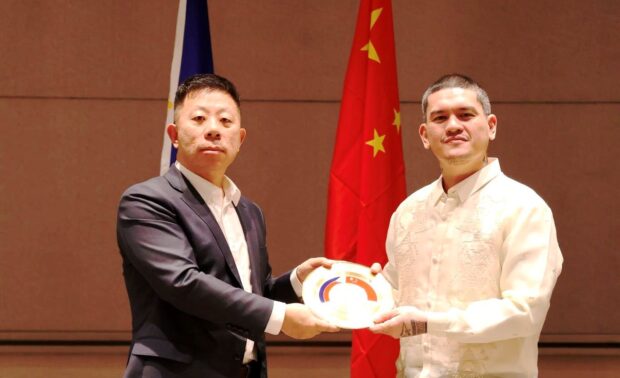
The Department of Foreign Affairs (DFA) denied that the “provisional understanding” required Philippine vessels to seek permission from China before embarking on rotation and resupply (RORE) missions within Philippine territory. Foreign Secretary Theresa Lazaro said the “provisional understanding” was signed in July 2024 in the wake of the July 17, 2024 ramming by the Chinese Coast Guard and fisheries militia of a Philippine boat. The clash led to injuries to eight Filipino sailors, including Seaman First Class Jeffrey Facundo, who lost his right thumb. In a span of two years, China had harassed fishermen, BFAR ships, Philippine Coast Guard boats and even Philippine Air Force (PAF) planes monitoring Panatag and Ayungin Shoals. Chinese ships have also intruded into the waters around Pag-Asa Island.
There is no question that China instigated the confrontation at Ayungin Shoal on the pretext that the military detail was constructing some “facility” at the ancient ship that had to be stopped. The clash on July 20, 2026 resulted in an ugly gash on the head of a Filipino soldier and injuries to another. As if this were not enough, the Chinese Coast Guard trained water cannons on a vessel of the Bureau of Fisheries and Aquatic Resources (BFAR) sent on July 23 to provide fuel to fishermen in Panatag Shoal. Lazaro said the “provisional understanding,” which was approved by top Philippine national security officials, led to the smooth conduct of 13 resupply missions since 2024. “The Provisional Understanding does not require the Philippines to seek permission to undertake RORE missions nor does it allow boarding and inspection of Philippine vessels, and, above all, it does not concede the Philippines’ sovereignty, sovereign rights and jurisdiction,” DFA stressed.
What is significant is that China has become more zealous in trying to police the Philippine EEZ and assert its fictitious “indisputable sovereignty” over an expanse of the sea that it had not controlled or administered in the past 5,000 years. This, after a large Chinese Navy ship slammed into a Chinese Coast vessel on August 11, 2025 while chasing a BFAR ship and harassing two smaller Philippine Coast Guard (PCG) boats. Two sailors on the bow of the Chinese Coast Guard ship disappeared after the collision, and their boats lingered in the area to search for them. Non-barbarians can be better seamen and skippers. #