By MELVIN C. GASCON
An examination of flood control projects in Cagayan province from 2022 to 2025 has revealed suspicious trends in contract pricing and distribution, raising red flags of possible bid rigging, contract splitting, and favoritism among a small circle of contractors.
Based on official data, the Department of Public Works and Highways (DPWH) has allotted P6.70 billion-worth for 158 flood control projects in Cagayan from 2022 to 2025.
Data from Sumbong sa Pangulo website showed that billions worth of contracts for flood control structures along the Abulug, Cagayan, and Baggao rivers, among others, display recurring “magic numbers” in their project costs and a concentration of awards to a handful of firms.
P49-million projects
A striking number of flood control projects cost ₱49 million or very close to it (P48.9 million, P49.3 million).
Government rules subject contracts worth P50 million or higher to stricter scrutiny and higher-level bidding processes.
According to the Commission on Audit (COA), this practice of keeping projects just under the threshold is a classic sign of “cost engineering” to avoid tighter oversight.
“This is a red flag for contract splitting or bid manipulation. It usually means the projects were designed not around actual needs but around how to bypass review thresholds,” a former COA auditor familiar with infrastructure procurement said.
Clustered big numbers
Beyond the P49-million cluster, other contracts were pegged at similarly neat figures such as P29.4 million, P19.6 million, P77.2 million, and P96.5 million.
Watchdog groups say these “cookie-cutter” numbers suggest budgets were cut or padded to fit ceilings instead of reflecting genuine cost estimates.
“In real construction, estimates vary widely. When you see the same figures repeated, it’s often a sign of pre-arranged pricing,” said Procurement Watch Inc., a civil society group monitoring public works.
Same contractors, projects
The data also show that only a handful of contractors dominate the projects:
- EGB Construction Corp. repeatedly bagged projects worth P96.5 million each.
- APS Construction landed multiple contracts clustered around P29–35 million.
- CMG Jr. Builders appeared several times with P49 million projects, often in joint ventures.
- Megay Construction consistently secured projects in the P48–49 million range.
According to a privilege speech by Sen. Panfilo Lacson, the repeating amounts serve as codes to indicate the “funder” — usually a senator or congressman — which is entitled to receive kickbacks of up to 25 percent of the cost of the project.
Such concentration, analysts warn, likewise limits competition and raises the possibility of collusion.
Contract splitting, JVs
Projects on the same rivers and towns — such as the Abulug and Baggao rivers — were often chopped into separate packages instead of being consolidated into one large project.
This practice, according to COA circulars, inflates administrative costs and makes accountability harder to enforce.
At least six projects were awarded to JLL Pulsar Construction Corp. in Lal-lo, Abulug, and Lasam towns which are priced very close to P49 million.
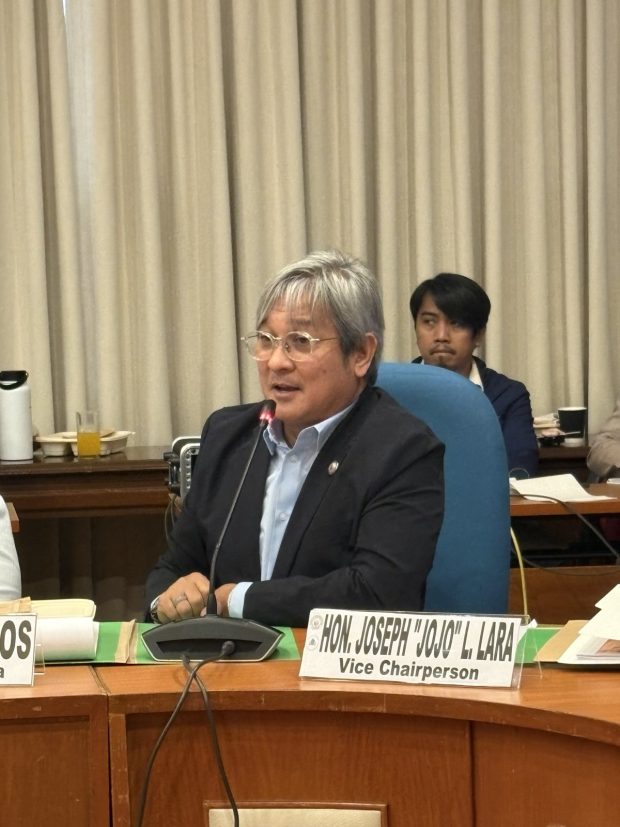
JLL Pulsar Construction (formerly Pulsar Construction) is a construction firm owned by Cagayan 3rd District Rep. Joseph “Jojo” Lara. He has, however, previously claimed to have divested ownership of the company.
Joint ventures (JVs) were also frequent, with the same small group of contractors repeatedly partnering with one another.
While legal, experts note this is a known tactic to rotate awards among allies while discouraging outside bidders.
Small projects, big questions
Even the smallest contracts raise questions. Some were pegged at P4.9 million or P9.8 million, mostly for drainage or slope protection.
According to former Department of Public Works and Highways (DPWH) officials, these small projects are often used as “test bids” or as qualifications for bigger projects, and may serve as entry points for politically connected “dummy firms.”
A rounding pattern
Finally, many contracts landed on rounded-off figures such as P49 million, P77.2 million, P96.5 million, and P143.8 million — unusual in real construction where estimates should reflect diverse labor and material costs.
“Rounded figures are often a sign that budgets were engineered to fit available caps, not actual project needs,” the COA Annual Audit Report has repeatedly noted in its findings on DPWH.
National context
The findings come as the DPWH faces increased scrutiny after President Ferdinand Marcos Jr. ordered a crackdown on anomalous public works, following his discovery of “ghost” and substandard flood control projects in Bulacan earlier this year.
Mr. Marcos has ordered a massive overhaul of the DPWH, by replacing Sec. Manuel Bonoan and installing Sec. Vince Hizon.
Hizon has vowed to file charges against erring DPWH officials and private contractors involved in “ghost” projects discovered in Bulacan province. #