By Diego Morra
The latest Oxfam global report has denounced the one-way traffic of wealth to the plutocratic billionaire class and monopoly of political power by entrenched dynastic clans as the key reasons why the billions of people live in misery and prevented from rising in the social, political and economic ladder.
In its Jan, 21, 2026 statement, the Philippine section of Oxfam reported that under present conditions, billionaires will monopolize political and economic power, the poor will become poorer and plutocrats will control all instruments of the state, from the repressive apparatuses to the legislative, judicial and bureaucratic departments. To cap, Oxfam confirms that billionaires are now 4,000 times more likely to hold political office than ordinary people. That means 400,000%, shutting off completely any chance that a charismatic working-class leader could ascend to power, or that a true-blue democrat could win the presidency, empower the poor and improve the welfare of the suffering millions.
What the Oxfam report entitled “Resisting the Rule of the Rich: Protecting Freedom from Billionaire Power” tells us is that the super-rich are not altruistic at all, they have no empathy and, like Elon Musk, Jeff Bezos and Peter Thiel, they do not believe in the idea that the state has the right to discipline greed, or even mitigate the rapacity of the capitalist class. They control political power, not only because of the 2010 Citizen United ruling of the US Supreme Court (SC) that made corporations are like human beings who have political rights and can support parties, candidates and even the worst kind of politicians known to mankind like Donald Trump, whose IQ reportedly is 73. They can be the *Svengali to a marionette like **Trilby, and their kindred spirit will laud them for scrimping on the rights and freedoms of people in their home countries and around the world.
Filipinos are no stranger to the idea to the racket known as beggar thy neighbor, which was what the US did to the Philippines with Parity Rights and a slew of economic policies that punished the country and profited the US. Aside from the unequal tariffs imposed, the Philippine economy was subjected to non-tariff barriers that prevented the free flow of Philippine goods to the US market. Worse, the poison to the national kitty, better known as “pork barrel,” was a vicious scheme the Americans introduced in 1920. Worldwide, Oxfam warns, the extreme concentration of political power is hollowing out democracies, weakening public institutions, and driving growing anger and unrest across the world.
In 2025 alone, global billionaire wealth grew by more than 16% to reach $18.3 trillion—the highest level ever recorded. Since 2020, billionaire wealth has increased by 81% even as living conditions for billions of people have stagnated or worsened since the pandemic began. At least 25% of humanity regularly do not have enough food to eat and nearly 50% half the world’s population lives in poverty. Oxfam warns that the combination of extreme economic inequality and political exclusion is creating a dangerous and unsustainable crisis for democracies. “The widening gap between the rich and the rest is at the same time creating a political deficit that is highly dangerous and unsustainable,” said Oxfam International Executive Director Amitabh Behar. A World Values Survey of 66 countries found that almost half of all people polled say that the rich buy elections in their country.
“Governments are making wrong choices to pander to the elite and defend wealth while repressing people’s rights and anger at how so many of their lives are becoming unaffordable and unbearable,” Behar said. In the Philippines, inequality is becoming increasingly visible and politically explosive. According to Forbes, the combined wealth of the country’s 50 richest individuals rose by 6% to $86 billion in August 2025, up from $80.8 billion the previous year. This concentration of wealth is abominable as tens of millions of Filipinos have to endure stagnant wages, skyrocketing rice and fuel prices, overcrowded public hospitals and recurrent disasters like floods and typhoons.
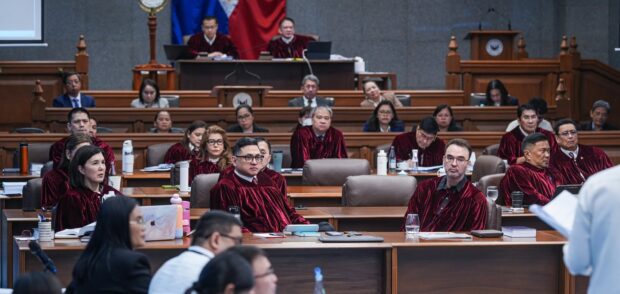
Public anger worsened last year after billions of pesos earmarked for flood control projects were siphoned off by corrupt officials and contractors and pocketed by members of the two houses of Congress. “Filipinos are at the frontlines of climate disasters, yet decisions about our safety are increasingly shaped by wealth and political connections. Inequality becomes deadly when greed determines who is kept safe and who is left to suffer the consequences of disasters,” said Oxfam Pilipinas executive director Maria Rosario “Lot” Felizco. “The growing concentration of wealth and political power undermines trust in public institutions. Addressing inequality in the Philippines requires not only economic reform, but decisive action to prevent money from capturing our democracy,” she added.
The Philippines remains the 15th most unequal country globally and among the countries with the highest number of poor people who have little or absolutely no chance to advance economically, despite the borrowed poverty alleviation measures that worked wonders in Latin America but floundered here in the Philippines, with some financial assistance ending up controlled by politicians and bureaucrats, and P89.9-billion of the money for PhilHealth, or health insurance, being sequestered by the Department of Finance (DOF) for unprogrammed appropriations. For sure, Filipino billionaires would not want to be taxed progressively even as high taxes inflicted on wealthy Americans in the 1950s funded infrastructure programs and increased employment, according to Robert Reich. In some cases, the US tax rate was 90%, which forced the super-wealthy to reinvest their cash. In the Philippines? A high tax rate won’t pass muster the legislature comprised of billionaires and their surrogates as well as the other half of the ruling ***moiety—the political dynasties. #
= = = = = =
WORDS OF THE DAY
- Svengali – a person who exercises a controlling influence on another, especially for a sinister purpose.
- Trilby – another fictional character who falls under the hypnotic control of the villainous musician Svengali.
- Moiety – a smaller part of a whole.