By Alvinson V. Aligam
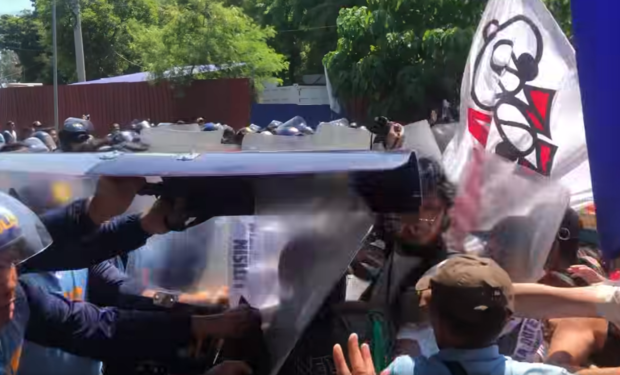
Progressive groups from Southern Tagalog, along with Metro Manila-based and national organizations, held a protest march from España to Mendiola on Tuesday, August 19, in commemoration of the 75th anniversary of the universal adoption of International Humanitarian Law (IHL) Month.
A part of a series of protest actions held on the same day, they demanded accountability from the Ferdinand Marcos Jr. over what they described as a worsening humanitarian crisis in the country.
With the slogan “Lupa, Hindi Bomba! Pagkain sa Mesa, Hindi Bala!” (Land, Not Bombs! Food on the Table, Not Bullets!) the protesters underscored that genuine peace and progress come from land reform and justice and not militarization.
Jeverly Seguin, Deputy Secretary General of Katipunan ng mga Samahang Magbubukid sa Timog Katagalugan (KASAMA-TK), said:
“Instead of ensuring food security and livelihood, the government is waging war against the people through bombings, encampments and forced displacements.”
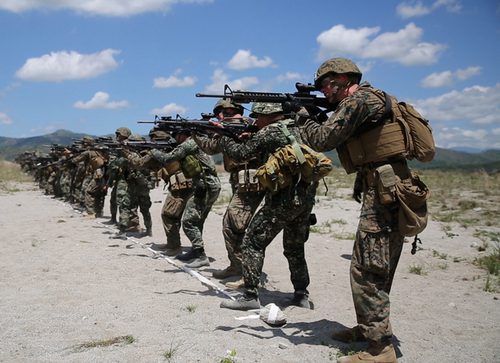
The groups criticized the government’s counterinsurgency programs — from past military operations to the so-called whole-of-nation approach under Executive Order No. 70—for intensifying militarization in countryside.
They reported that 95 farmers, indigenous peoples, workers, and local leaders are detained as political prisoners, charged with fabricated offenses such as illegal possession of firearms and murder.
Human rights alliance Karapatan likewise condemned the Marcos Jr. administration’s National Action Plan for Unity, Peace, and Development (NAP-UPD), branding it as a repackaged counterinsurgency program that fosters IHL violations.
The group stressed that the plan is driven by the National Task Force to End Local Communist Armed Conflict (NTF-ELCAC) they said commit red-tagging and other human rights abuses.
Saara Rapisora of Karapatan-Rizal declared:
“On this day, before the people, we directly point to the US-Marcos regime and its fascist AFP as the primary perpetrators of the grave human rights violations against the masses—whether they be indigenous peoples, farmers, workers, youth, or women.”
The protesters also assailed the government’s prioritization of military and police budgets over social services such as education, healthcare, and agrarian reform.
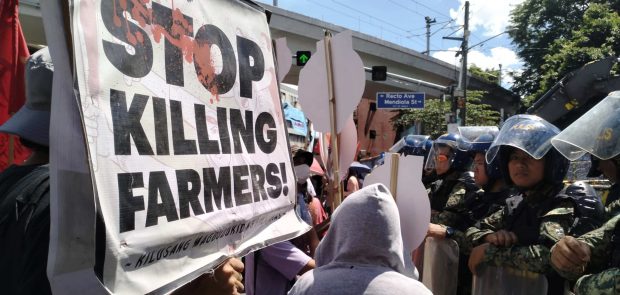
The groups pressed for the continuation of peace talks between the Government of the Philippines (GRP) and the National Democratic Front of the Philippines (NDFP), stressing that lasting peace can only be realized by tackling the root causes of armed conflict—landlessness, poverty, and persistent human rights violations.
The España-to-Mendiola protest marked the first leg of a series of mobilizations that progressive groups announced will continue before offices of government agencies such as the Department of National Defense, the Office of the Ombudsman, and the National Intelligence Coordinating Agency (NICA). #