By Kylyn Kyth G. Cuñado and Heaven Grace R. Peralta
Senate Bill (SB) 1979, the Prevention of Adolescent Pregnancy measure before the Senate, has sparked a heated debate between a lawmaker and conservative groups. The debate has even drawn in President Ferdinand Marcos Jr. who called the proposed law ‘woke and abhorrent.’
The president’s remark was a surprise, coming as it did mere days after expressing support to sex education in schools. His criticism went as far as claiming it would encourage children to ‘masturbate and try other sexualities,’ which is not what the bill actually says.
Such vituperation against SB 1979 begs the question: What exactly is ‘wrong’ with preventing adolescent pregnancy through sex education in schools?
Senate Deputy Minority Leader Risa Hontiveros authored and filed SB 1979, otherwise known as the Prevention of Adolescent Pregnancy measure she filed on March 7, 2023. Its declared goal is simple: empower the youth with knowledge that can protect them from unplanned pregnancies, sexually transmitted infections (STIs), and abuse.
Opposition to the bill has reached new heights nearly two years after it was filed and as the mid-term elections last May was fast approaching. Project Dalisay of the National Coalition for the Family and the Constitution (NCFC) claims that the bill’s Comprehensive Sexuality Education (CSE) provisions are based on ‘international standards’ that are “too Western,” thus culturally inappropriate for the Philippines.
The intense criticism and lobbying by conservative groups has had its intended effects.
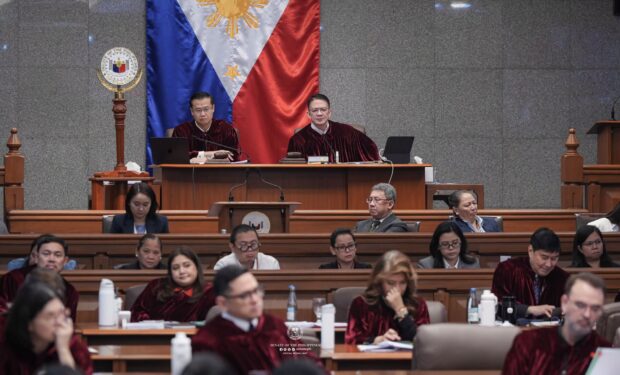
At least seven senators namely Nancy Binay, JV Ejercito, Cynthia Villar, Bong Go, Jinggoy Estrada, Loren Legarda, and Bong Revilla requested the removal of their signatures from the committee report on SB1979 just months before the midterm elections. Revilla and Go, original co-authors of the bill, cited religious, cultural and constituent concerns after almost two years of backing it. Their candidacies in the past mid-term elections may have figured largely in their decisions.
The bill has also faced opposition from conservative politicians who frame sex education as a moral threat rather than a public health necessity. Sen. Migs Zubiri claims the bill doesn’t align with national values, stating that sex education is a responsibility of the parents, not schools.
Zubiri made no mention or was unaware of the 35% increase in pregnancies among children aged 10-14 as revealed by Save the Children in March 2024. The Commission on Population and Development (CPD) reported as well a 35.13% increase in live births among girls under 15, from 2,320 in 2021 to 3, 135 in 2022.
Sen. Joel Villanueva, scion of the founder of who is “born-again Christian group, argues that the bill is not important because he sees no national emergency on sex education in the country. His claim however is contrary to National Economic and Development Authority’s (NEDA) declaration that teenage pregnancy has become “a national and social emergency.”
The Department of Health (DOH) has acknowledged that sex education is a crucial solution to the growing problem despite government’s refusal to view teenage pregnancy as a national emergency. Likhaan Center for Women’s Health Advocates has long pointed out that lack of proper sex education for youth is a major factor behind the fact that one in ten births in the country is by a mother under 19.
Early pregnancy among teens is hardly a new problem. Not in the Philippines at least. This is also not the first time that sex education has been introduced in schools. The Responsible Parenthood and Reproductive Health Act of 2012 or the RH Law also addresses the issue. The same law has faced, and continues to face, vigorous opposition by religious and conservative groups.
According to those who oppose sex education in schools, the issue of increasing early pregnancy among teenagers is a moral issue, not a public health crisis.
Passionate about the issue, Hontiveros has been expectedly outspoken in defending the bill against disinformation and fear-mongering. She said her bill is based on local studies whose sole aim is to protect children and young adults for the dangers of early pregnancy and abuse.Despite the rejection by fellow senators, she immediately filed a substitute bill to make her measure stronger.
A government that claims to prioritize the welfare of the youth should not hesitate to support measures such as that of Hontiveros’. Better yet, it should not hesitate to implement policies designed to protect children and the youth without being prompted by bills in Congress. It is well within its powers to implement sex education if such programs would redound to benefits to the majority. By ignoring calls for measures to reduce teenage pregnancy however, the government and its narrow-minded politicians become obstacles to solutions to glaring social problems. #