by Katrina Lazarra
In a country where following your passion often comes with the warning “It won’t pay the bills,” a shift is emerging on sidewalks, in parks, at weekend art markets.
A modern take on the grassroots phenomenon of table-vending is giving young creatives a new kind of platform: one where they can express themselves and earn a living. Latag is a local term referring to laying down a mat or table to sell goods and has surged in popularity after the Covid-19 pandemic. It is seen as less demanding on a merchant’s time and energy, making it the ideal side hustle for many overworked yet underpaid workers that make up a significant portion of the country’s population.
In Metro Manila, the current minimum wage stands at ₱645 per day, summing up to ₱14,190 a month. That is excluding taxes, mandatory deductions, and the relentless rise of inflation. This is a far cry from the stated ₱1,200 daily living wage, or P36,000 monthly by economic think-tank IBON Foundation. For all daily wage earners, the government-set minimum wage does not cover the barest of daily needs, let alone “luxuries” such as savings, healthcare, or creative pursuits.
This is where latag comes in, not as a hobby but as a survival strategy.
Faces of latag
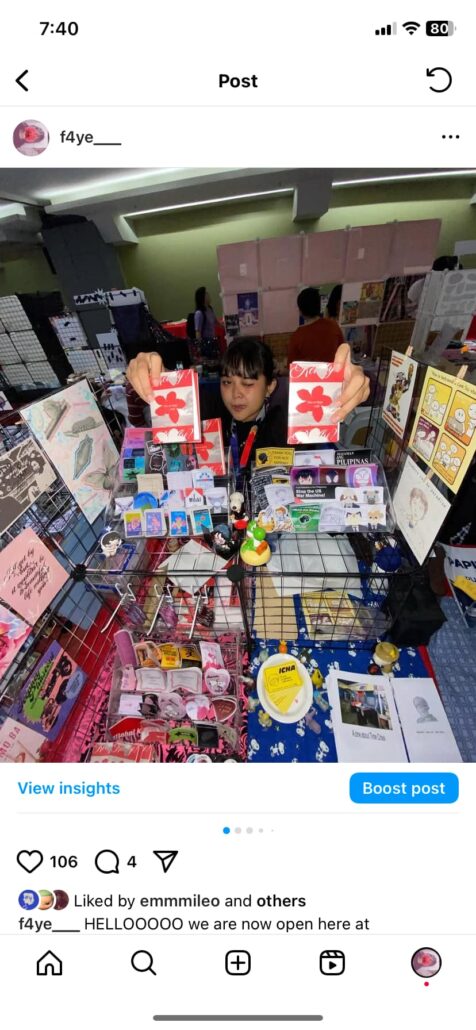
Angelica Faye Pitpit is newly-hired as a creative officer of a coffee shop chain, yet she still sets up a table at art markets to sell her drawings, stickers, postcards and similar items.
She started becoming a merchant in 2023 and has been at it since then. She made her way into latag scene during a financially demanding time in college. Thesis expenses, materials, and daily expenses piled up, and she saw latag as a solution.

“What really motivated [me]…aside from publicizing and sharing my art [are] my economic needs,” Faye admitted.
Junior architect Julius Raynera also turned to latag while completing his thesis. However, even after graduating, he still relies on vending and doing commission work during petsa de peligro — those dreaded days before payday and his wallet had become thin.

“Mostly, I use it to save up, but I also rely on it during petsa de peligro, when my salary falls short in the days leading up to payday,” he said.
For part-timer Shannia Cabuello, balancing her job as kitchen staff with showcasing her creations at a latag at work helps her earn extra income and make ends meet. With her main salary often falling short, her side hustle selling crochet items, necklaces, key chains and similar handmade merchandise provides the little extra support for personal needs.
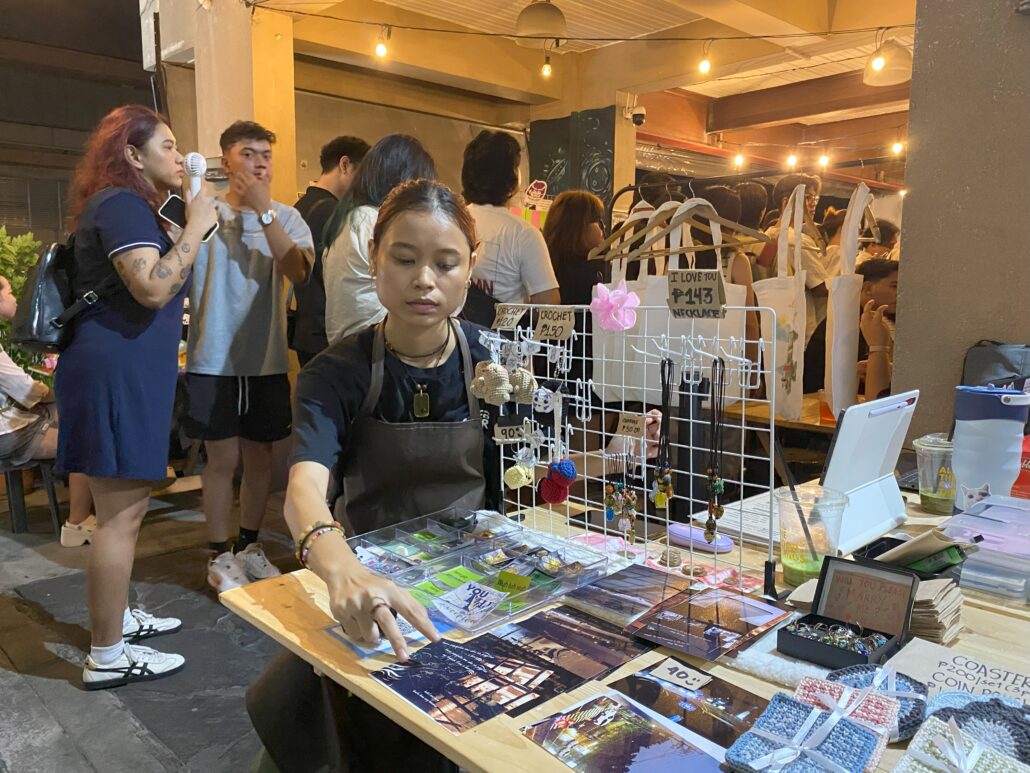
Her journey into latag began when she needed a tablet for school, which is something her monthly paycheck couldn’t afford. Shannia started selling handmade accessories for a gadget that has become a necessity for students like her.
“I would either get a cash advance, borrow money, or ask my mom for help when I’m short on cash,” she recalled on why she thought of latag selling her handmade pieces.
Event organizer Christian Dave Opiano dove into the latag scene after the pandemic restrictions lifted, offering punk-inspired merchandise to passersby.
Dave continued to vend after dropping out of UP and in between multiple jobs because his main line of work doesn’t pay enough. He relies on latag to help cover his daily expenses and provide extra income.
“Back then, I would go start my day with just fare money but go home with thousands of pesos in hand. That inspired me to keep going and continue with it,”Dave said.
Hustle with passion
Faye, Julius, Shannia, and Dave depended on latag for different reasons, but all of them are equally driven by passion. In a culture that doesn’t always value artistic work, latag has become more than just a side hustle. It’s a space to breathe, to create, and to be seen.
“This really is my passion,” said Faye. As a creative person, latag offers her a way to express herself and get a break from her corporate life.
Similarly, Shannia describes her side hustle as a breather from her main job. “It’s like rest. It’s where I find calm and rest,” she said.
For Dave, the money he earns is not the driving factor why he continues on in this pursuit. “For me, I just want to present my art. That’s really it, I just want to be recognized,” Dave revealed.
While still not earning enough even with latag, they still view their side hustle as necessary to their passion for art.
But if they love it so much, why not pursue it full-time?
Harsh reality
Most artists in the Philippines can’t live off their respective passions alone. Government support is scarce. Art programs are underfunded. Opportunities are limited. And culturally, art is still often seen as a hobby, not a profession.
Julius pointed out that the latag scene will never become a primary source of income for artists. At best, it will remain as a small and limited cultural space where artists and their audience can connect and interact. “It could be a source of income, but I don’t see myself going full-time with it. There isn’t even a market for artists here in the Philippines,” he said. #