Labor rights organizations called for accountability in the Binaliw Landfill tragedy in Cebu City that caused multiple fatalities and injuries.
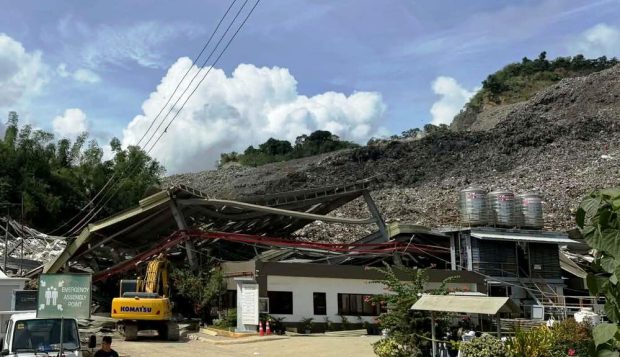
The city’s main trash disposal hub collapsed last Thursday, January 8, causing at least eight deaths and 12 injuries. Twenty-eight individuals remain missing.
The Church People–Workers Solidarity (CWS) condemned the deadly collapse as “a crime born of greed, neglect, and the systematic violation of workers’ rights.”
The ecumenical workers’ solidarity group said the tragedy exposed the grave injustice of forcing people to risk death simply to survive.
“Employers and companies that deliberately ignore occupational safety and health standards in order to cut costs and maximize profit must be held fully accountable. The blood of the workers is on the hands of those who placed profit above human life,” CWS said.
It called for “conversion of hearts, systems, and laws” to make workers’ welfare a priority over profits.
The Kilusang Mayo Uno (KMU) condoled with the family of the workers who perished in the “trashslide” and vowed to campaign for justice for the victims.
“It is a crime that the workers were ordered to work in such dangerous circumstances. The capitalist deliberately ignored safety and health protocols,” KMU said.
The labor federation added that the country’s Occupational Safety and Health Law (Republic Act 11058) must be immediately amended to make it more enforceable against erring employers.
KMU demanded a thorough investigation and for government agencies to make the landfill operator, billionaire Enrique Razon’s Prime Integrated Waste Solutions Inc. (PWS), accountable.
The Institute for Occupational Health and Safety Development (IOHSAD) said it prays for the full recovery of the twelve injured and for the safe rescue of the 28 who remain missing.
“Beyond our sympathies, we express grave concern over this tragedy, which has affected many lives and occurred amid long-standing warnings and reported hazards at the landfill site,” IOHSAD said.
The institute pointed out that concerns regarding the safety and stability of the landfill had been raised well before the tragedy.
Violations, warnings
City Councilor Joel Garganera earlier cited unsafe waste management practices as a possible contributing factor.
He noted that landfill operators had been cutting into accumulated waste, reshaping the garbage pile over time, and extracting soil before stacking waste anew, resulting in unstable mounds.
These statements are consistent with workers’ concerns over the landfill’s growing height and condition, IOHSAD said.
Beyond occupational safety concerns, the landfill has also been linked to serious environmental issues.
Ceby City residents have reported foul odors, untreated wastewater, and possible water contamination affecting Barangay Binaliw and nearby Panoypoy village in Consolacion town.
In August 2024, the Cebu City Solid Waste Management Board flagged the landfill for violating the Ecological Solid Waste Management Act (RA 9003) after an inspection.
The Board said portions of the site practiced open dumping, ordering corrective measures and continued monitoring.
The following month, residents petitioned the City over persistent foul odors, health risks and fly infestations.
In June 2025, then Mayor-elect Nestor Archival warned that the landfill could face closure if these environmental problems remained unaddressed.
The “trashslide” happened six months after the mayor’s warning.
= = = = = = = = = =
SIDEBAR: ‘We haven’t learned’ — Payatas trashslide reporter
On July 10, 2000, the Payatas Landfill in Quezon City collapsed, killing at least 218 people. About 300 people remain missing. Some accounts say that 700 to about 1,000 were the actual casualties. The victims were scavengers who also lived on the mountains of Metro Manila’s garbage.
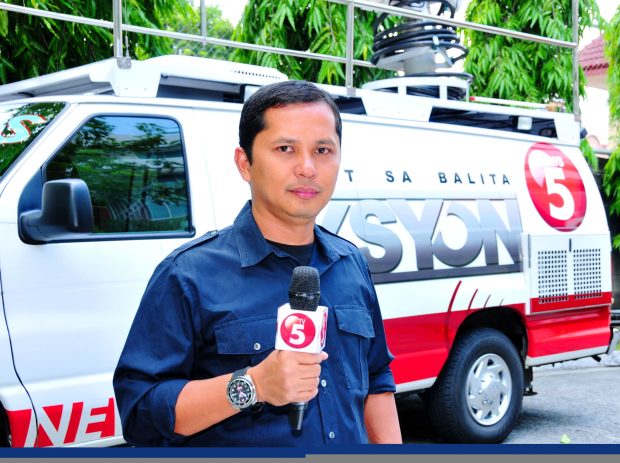
Erel Cabatbat was then a young reporter for the now defunct RPN 9. He said it was among his first major coverages, one that still haunts him to this day.
- What did you feel when you first beheld the Payatas “trashslide?”
It immediately depressed me. It made me realize further how poor our people are, living on garbage dumps. I was also angry, making me ask, “Where was government for the people staying there?”
- What was going through your mind as the search, rescue at recovery dragged on?
The search and rescue resources (people and equipment) were slow and practically non-existent for a tragedy of such magnitude. There was effort, sure, but woefully inadequate.
- What did you feel when many were not rescued and the victims were not recovered?
Real frustration, anger and helplessness. Then the aftermath was even worse because it seems no one had been held accountable.
- What did you feel when you were interviewing the victims’ families begging for their kin to be rescued or recovered?
That was one of the most difficult interviews I ever did. How do you ask someone you know is grieving and desperate while already knowing the dreadful answers to such questions?
- What were your coping mechanisms in such emotional and stressful coverage?
I thought about my daughter at the time. I thought she should know what happened in Payatas so she would appreciate she was lucky for not having such fate. I also thought that the government must be held accountable for its negligence and apathy.
- What can you say that more than two and a half decades later, a similar tragedy happened in Cebu City?
We haven’t learned anything, did we?
= = = = = = = = =
The Center for Trade Union and Human Rights (CTUHR) for its part called on government rescuers to work overtime to rescue the missing workers.
“Our hearts are heavy. This is a tragedy that was waiting to happen. The mountain of garbage has already reached almost 20 storeys high, and the strong earthquake and typhoons that hit Cebu in the previous months have surely loosened the soil in the landfill, as these have caused landslides in the province in the past,” CTUHR said.
The institute also pointed to Razon as well as Cebu City government’s accountability for letting the landfill become dangerous for the workers.
“We know the profile of workers who work in sanitary landfills. They are some of the poorest Filipinos and suffer some of the worst working conditions, even as they perform jobs that are crucial to the economy,” CTUHR said.
“The Binaliw Landfill collapse further exposes the need to criminalize employers’ violations of occupational health and safety standards that result in workers’ deaths in the workplace,” it added. # (Raymund B. Villanueva)