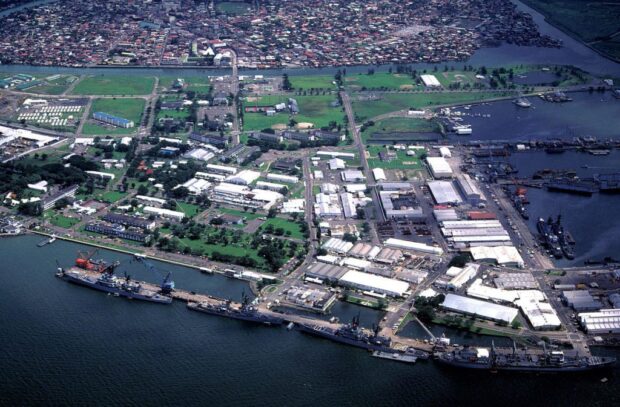
When Supertyphoon Uwan hit in November last year, Cagayan Valley’s biggest city was left with only one bridge open. Three were closed to traffic while three other bridge projects have yet to be finished despite years of construction and billions spent.
By Raymund B. Villanueva
FIRST OF TWO PARTS
DREAD was what Cherry Paraggua felt when she heard the news that another “super typhoon” was barreling down Cagayan Valley in November last year. She recalled she just finished tidying up their house from silt deposited by the Cagayan River that flooded due to Typhoon Tino (International name: Kalmaegi) mere days earlier.
“Here we go again,” she sighed resignedly.
Cherry’s house sits 200 meters from the Cagayan River’s bank and the waterway’s flood control and anti-erosion gabions. But the mighty Cagayan had always been contemptuous of human efforts to keep it within its channel when heavy and sustained rains come.
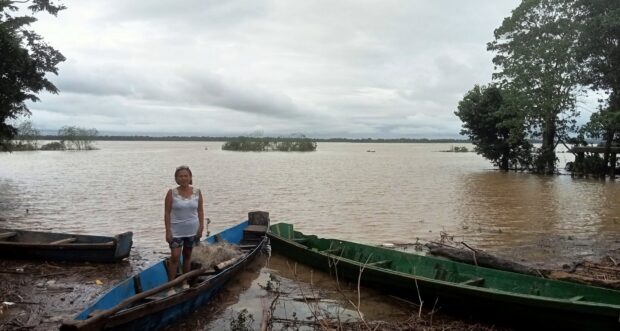
Cherry knew she and her husband Roy Balisi would have to heave their furniture and clothes up to the rafters again when the floodwaters return.
Roy wasn’t excited either. As a hardware store employee who regularly delivered construction materials to customers across the river, he and his coworkers would have to motor farther to reach their destinations via bridges that manage to remain open when the river is swollen. Those spans may be several municipalities, even a province, away.
When Super Typhoon Uwan (International name: Fung-wong) finally came, it brought extreme rainfall exceeding 200 millimeters (mm) in many areas of Luzon, and upwards of 400 mm within 24 hours in Cagayan Valley, particularly in the Sierra Madre, Caraballo and Cordillera mountain ranges where Cagayan River’s headwaters are. Weather authorities described the deluge as having reached “catastrophic levels.”
Uwan left at least 33 people dead and 52 others injured in the Philippines.
For comparison, Typhoon Ondoy dumped an astonishing 455 mm of rain in a 24-hour period in September 2009, still considered as most devastating flood in the Philippines since 1967.
From its normal average width of a couple of hundred meters, Cagayan River widens by as much as two-kilometers in places when it floods. It did the same during Uwan. Such occurrences make bridges actual lifelines between communities and towns downstream of the country’s longest and mightiest waterway.
Super Typhoon Uwan’s floods underscored a long-standing problem: Without more bridges, Tuguegarao would be isolated from its own barangays and neighboring towns should surrounding rivers breach their banks all over again.
City dependent on bridges
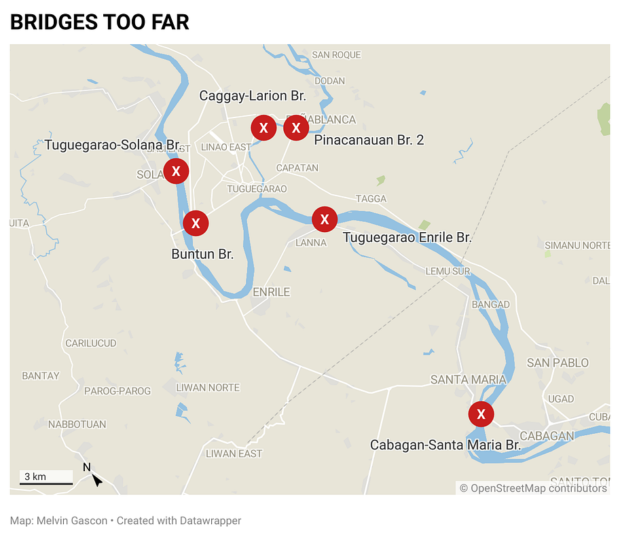
The City of Tuguegarao is located on the eastern bank of the Cagayan River. The city itself is halved into two areas by a tributary called Pinacanauan de Tuguegarao, aside from various other creeks that crisscross its center. It would not have grown without the bridges that bring people to the city for commerce, livelihood, education and other activities.
There are two major bridges that link Tuguegarao to its neighboring towns: Buntun Bridge that spans Cagayan River and the Pinacanauan Bridge that crosses the waterway of the same name. An overflow bridge over the Pinacanauan serves as a shortcut from the city’s eastern barangays to its poblacion, but is closed to traffic whenever the water rises by just a few meters.
Tuguegarao is home to roughly 167,000 residents. As the bustling capital of Cagayan province and the valley’s regional center, it is where regional offices of government agencies, the region’s top universities, and Cagayan Valley’s main medical center are located.
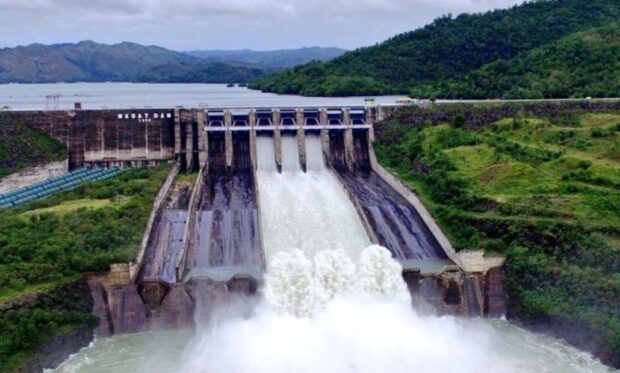
When Uwan came, upstream runoff rolled into rivers surrounding the city. Magat Dam in Ramon, Isabela – once the country’s biggest dam, now second only to Pangasinan’s San Roque – opened seven of its nine spillway gates at the height of the storm, discharging water of over 6,000 cubic meters per second (CMS), significantly increasing the volume of water joining the valley’s river systems.
Cherry and Roy’s home was again submerged in eight feet of floodwaters in no time. The couple, their daughter and Roy’s elderly mother had to evacuate to a neighbor’s house that, while also submerged, had at least an upper floor where they could temporarily settle and stay dry while waiting for the floods to subside.
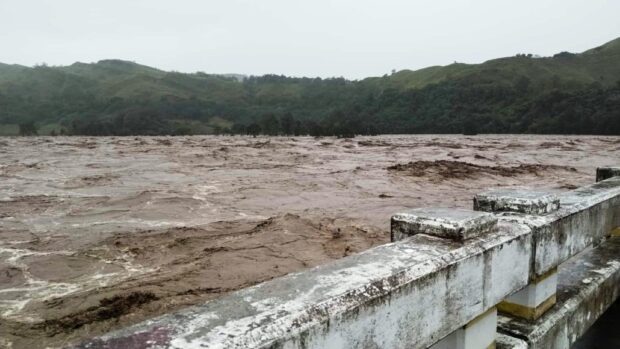
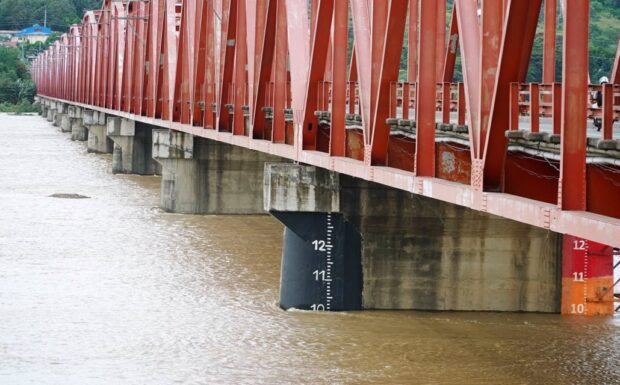
Water level at Buntun Bridge in Tuguegarao City — a primary indicator for the Cagayan River’s status — breached its 9.0-meter critical threshold by November 9, a Sunday. By November 11, the river peaked at 12.0 meters, nearly matching the devastating levels seen during Typhoon Ulysses in 2020 when it hit 13 meters. Floodwaters inundated 44 out of the city’s 49 barangays, leaving thousands of houses submerged.
City stops when bridges close
Buntun Bridge was ordered closed that Sunday, November 10, over safety concerns, puzzling residents as the span underwent retrofitting only in 2023. The DPWH said P101.3 million was allocated to strengthen the aging bridge.
The move left the entire city with only one major bridge open, cutting the city off from towns west of Cagayan River. Thousands of students, workers, vendors and motorists from other municipalities were stranded.
Tuguegarao’s 1.37-kilometer concrete and steel truss Buntun Bridge was once the country’s longest when it opened in 1969. Until recently, it was the only bridge that connected the city to the western part of the entire province of Cagayan, even to the Cordilleran provinces beyond.
On Wednesday, November 12, the city government announced the bridge’s reopening as the river’s waters began subsiding.
It wasn’t only the Buntun Bridge that was closed to traffic during Uwan’s floods. The overflow bridge between the city center and its eastern barangays was inundated, forcing residents to take the longer route through Peñablanca town and the Pinacanauan River Bridge, adding at least eight kilometers to the trip. To cross the Cagayan River, motorists had to travel north to Amulung Bridge in the town of the same name 30 kilometers away. Or they could have driven south to Cabagan in the adjacent province of Isabela to take its brand-new P1.225 billion span.
The Cabagan-Sta. Maria Bridge, however, collapsed a few months prior, mere four weeks after it was opened to traffic in February 2025. A truck loaded with boulders caused an entire span to break, putting to waste more than a decade of anticipation by nearby residents such as Roy who thought his delivery runs would be easier and faster hence.
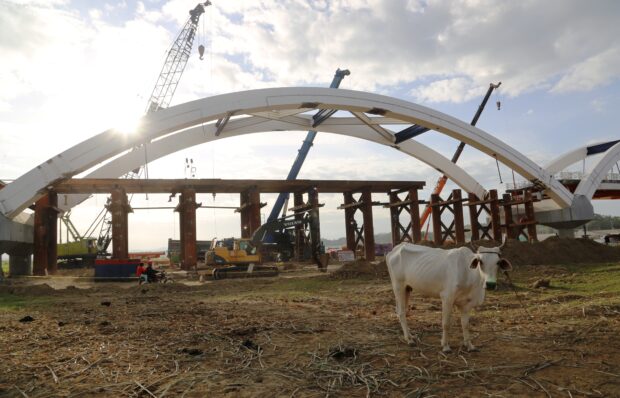
The incident drew wide speculations over its altered design and quality of materials used, highlighting problems over bridge construction strategies in the country and forcing President Ferdinand Marcos Jr. himself to lead inspections of the aftermath. The bridge reopened to light vehicles last March by replacing the broken section with a temporary steel deck. During Super Typhoon Uwan, the nearest southern crossing available for Tuguegarao residents was via the Cansan-Bagutari Bridge 40 kilometers away. This bridge is itself subject to temporary limits or load restrictions periodically enforced by local governments and the DPWH.
The closure of bridges linking Tuguegarao to its barangays and neighboring towns highlighted the city’s vulnerability during flooding events. Every time the river rises, there are few dependable alternatives. Tuguegarao’s access routes become limited when its bridges close.
Rush to build spans
Past and current Representatives of Cagayan’s Third Congressional District as well as Tuguegarao City mayors sought funding to build more bridges around the city. It is the only solution to the city’s connectivity problem to the rest of the province and the region it serves as economic, educational, medical and political hub.
Of the four bridge projects that were started since 2011 and despite a total of P10.52 billion in allocations, however, only one may be considered as “partially serviceable.”
The Caggay–Larion (Dondoyan) Bridge
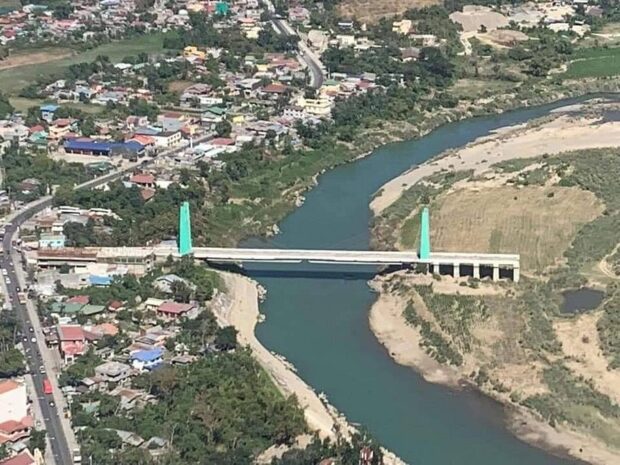
Commencement of the bridge’s construction was met with hope, even excitement, in April 2011. It was envisioned to help decongest traffic in the city’s main entry and exit routes to its eastern barangays across the Pinacanauan, linking Poblacion to barangays Caggay, Larion Alto, and Capatan. It was given a P1.22 billion budget.
A decade and a half into the project, initiated during the administration of former Tuguegarao mayor Jefferson Soriano, only the cable-stayed bridge’s superstructure and main elevated span have been finished. No load-bearing test had been conducted while its approach roads were never finished.
Also known to locals as the Dondoyan (Sway) Bridge, it has since earned the monicker “Bridge to Nowhere.” The locals once floated the idea of making the bridge a tourism attraction as a jarring monument to engineering and government folly.
The vital project is halted not just due to structural integrity concerns but also to political disputes. Soriano’s successor and bitter rival Maila Ting-Que said that the project’s completion was stalled when budget allocations intended for it were diverted by the Soriano administration. Attempts to resume structural testing and finish the approach roads were heavily debated and blocked by the city council, majority of whom are Soriano-allied.
The city government has sought DPWH’s assessment if the bridge may still be completed or should be demolished altogether.
Pinacanauan Bridge 2
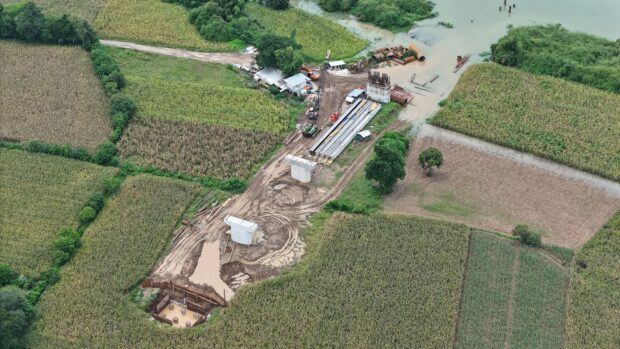
It is a P1.7 billion infrastructure initiative meant to replace a narrow and decades-old overflow bridge connecting the city center to the eastern barangays. It was also envisioned to make travel to the city from Maharlika highway and the rest of the region quicker.
The first of Rep. Joseph Lara’s big-ticket bridge projects under the legislator’s self-serving “KaunLARAn” tagline, it has a total contract scope of P1.7 billion.
The first package worth P141.8 million was awarded to EGB Construction and was completed in 2022. A second contract worth P101.2 million was awarded to Double J1908 and completed in the same year. These were followed by two additional packages awarded to St. Gerrard and JC Palomo at P265 and P285.9 millions, respectively, with a 98% on paper completion. The current fourth package, also awarded to Double J1908 for P264.4 million is at about 50 per cent completion.
In April 2025, a fifth package worth P139.6 million was again awarded to Double J1908, though initial progress had been negligible since. By mid-year, over P683 million had been disbursed to the contractors, but construction is obviously far behind schedule.
Construction lulls and delays were initially blamed on weather conditions, but recent inquiries from local leaders — including Mayor Ting-Que — have raised concerns over the allocation of government funds. Local investigations have noted discrepancies such as a lack of required heavy equipment at the site.
Tuguegarao–Enrile Bridge
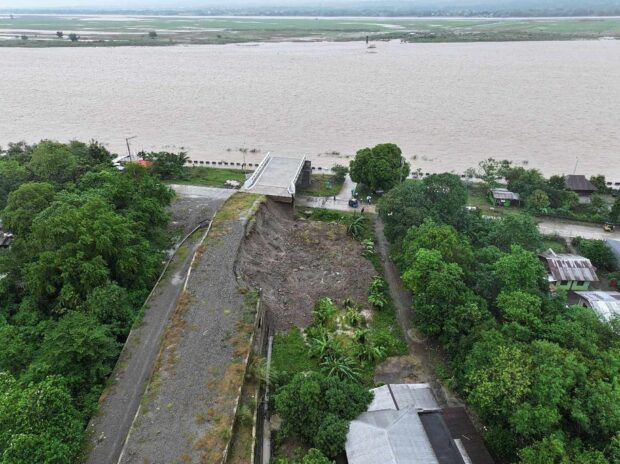
This is another bridge project that has effectively stopped construction since the project’s Phase 1 started in 2023. By year’s end, the DPWH has completed the first phase, which included a 620-meter road opening and a 20-meter overpass bridge.
Planned to form part of an eight-kilometer alternate route and to reduce heavy congestion on the Buntun Bridge, the structure was designed to cross the Cagayan River, connecting Barangay Gosi in Tuguegarao City to Barangay Alibago in Enrile, Cagayan.
The project has an annual budget of P100 million, which at a total approved funding of P2.9 billion, may only be completed in 2052, Enrile Mayor Miguel Decena Jr. said. He said Rep. Lara did not bother to conduct any consultation with the Enrile LGU, a claim Tuguegarao’s Ting-Que corroborated, before seeking national funding and starting construction.
Lara’s reported reply to Decena Jr.’s clarificatory questions was: The bridge is a national project. The local government unit had no say in it. “Sinagasaan na lang kami,” (We were just ran over) Decena Jr. told Kodao.
The project is practically halted due to unresolved right-of-way settlements, uncompensated landowners, and environmental red flags as the area was classified by the Department of Environment and Natural Resources as a “No Build Zone.” The retaining wall of the newly-built approach also collapsed during intense rains in December 2024, further delaying the project. Decena Jr. also filed a case against contractor Megay Construction for non-payment of local taxes.
Decena added: “Had we been asked, we would have told Rep. Lara to build the bridge closer to Buntun Bridge. That way, residents of our town can be nearer to the city center where most of us are bound for anyway. Why would we want the new bridge to go to Tuguegarao’s Barangay Gosi and then double back just to reach the city?” he asked.
Tuguegarao–Solana Steel Bridge
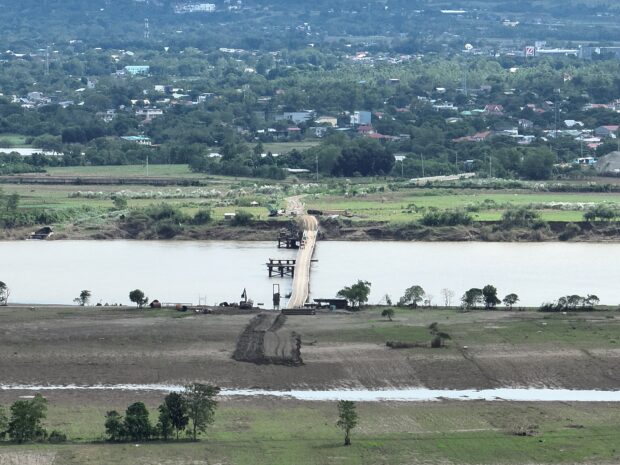 The steel bridge is open to light vehicles but is regularly closed due to various reasons. (Contributed photo)
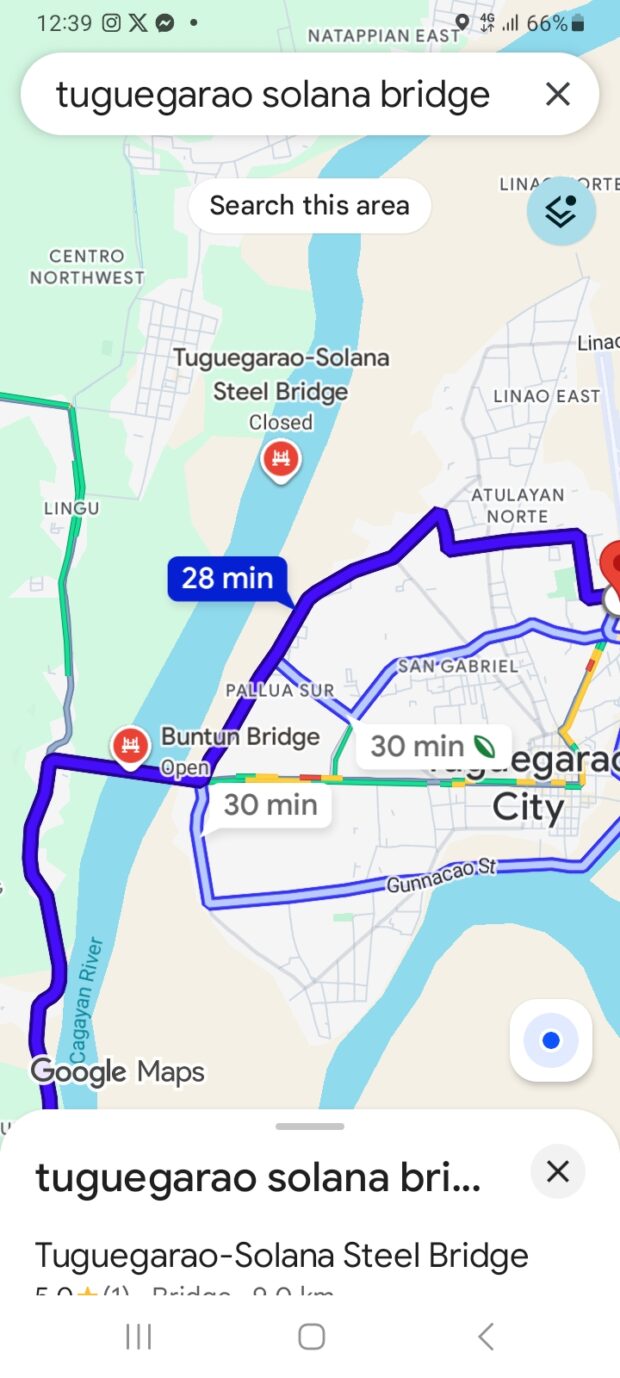
What residents and motorists know as the Tuguegarao-Solana Bridge is a temporary steel bridge over the Cagayan River, opened to traffic on December 19, 2024. It is the first part of an ongoing, highly anticipated permanent P4.7-billion four-lane bridge project.
This project is meant to alleviate traffic bottlenecks to and from Tuguegarao City and as a redundant crossing to assist the aging Buntun Bridge that had been carrying the crossing’s workload in the past 57 years. When open to traffic, the temporary structure dramatically cuts travel time from over an hour to just 8 to 10 minutes.
The steel bridge is to actually accommodate ongoing bored piling works for the permanent bridge that would eventually bear the same name. Because it is low on the water, it was no help to the city when the river overflowed its banks during Supertyphoon Uwan and similar flooding. The temporary steel bridge is periodically closed to heavy vehicles and strictly closed overnight, defaulting traffic back to the Buntun Bridge during those hours.
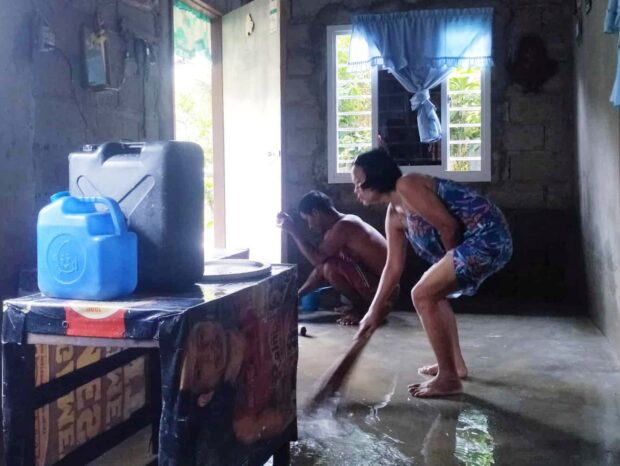
Even after the floodwaters have receded from their home, Roy had to wait for several more days for the rivers’ flow to return to normal and enable him to return to work. He spent these helping Cherry clear silt from their house and bring their furniture and clothes cabinets down from the rafters. He also lost income from his no-work-no-pay employment due to the closure of the bridges. #
NEXT: Tuguegarao bridge projects: Quick to start, slow to complete
= = = = =
This two-part investigative report was produced with the assistance of Earth Journalism Network.