Filipino religious and civil society organizations have announced a major rally on Sunday, June 28, against corruption in the Philippine government, demanding the prosecution of all those implicated in the flood control, budget insertion, and kickback delivery scandals.
The Catholic Bishops’ Conference of the Philippines (CBCP) said the rally, dubbed the White Ribbon Movement March, would be held in the country’s historic People Power Monument to remind Filipinos they deserve a better government and future.
“We believe that a better future can only be achieved through better politics, politics that serves the people’s interests, protects human dignity and is guided by justice rather than greed,” CBCP InterReligious Leaders’ Council for National Transformation lead convenor and Kidapawan Bishop Colin Bagaforo said.
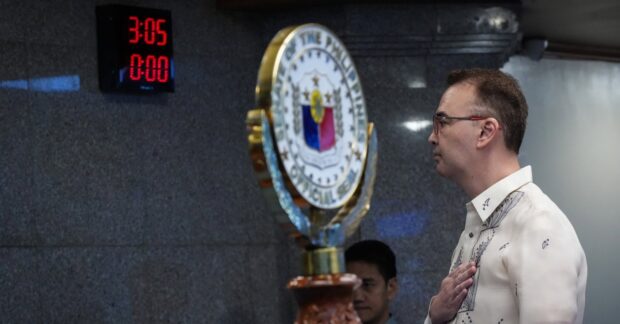
The announcement came as members of the Philippine House of Representatives and defense counsels of Vice President Sara Duterte are engaged in pre-trial conferences for the start of her impeachment trial on July 6. The Philippine Senate, meanwhile, is debating on who would preside over the trial over concerns that its current president, Senator Sherwin Gatchalian, is a not a lawyer.
The rally shall be held on the month that President Ferdinand Marcos Jr. is due to open the Second Regular Session of the 20th Congress of the Philippines, a time for his government to submit its proposed national budget for next year. Marcos himself is alleged to have masterminded billion-peso budget insertions that eventually became kickbacks for him and other government officials.
Marcos, Duterte and many others
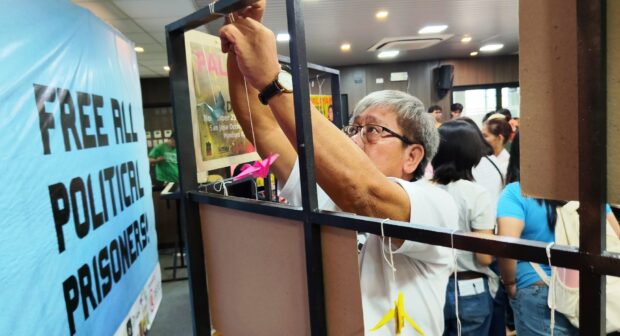
CBCP’s announcement was immediately welcomed by other anti-corruption groups, including Bagong Alyansang Makabayan (BAYAN) and Kilusang Bayan Kontra Kurakot (People’s Anti-Coruption Movement).
“The June 28 march reflects the people’s clamor to end corruption impunity…We reiterate our demand that top officials in the Executive and both Houses of Congress be made accountable for enabling, plotting, and benefiting from the widespread corruption in the bureaucracy,” BAYAN said.
The group said it also welcomes the impeachment of Vice President Sara Duterte as we call for the immediate start of her trial, the presentation of all evidence, and her conviction for betrayal of public trust.
The rally organizers said continuing anti-corruption calls should not stop with Duterte’s impeachment and should target the masterminds and principal beneficiaries of the pork barrel controversy, including Marcos Jr.
Amid the Filipino’s rising poverty and economic difficulties, the anti-corruption advocates added it is important to make corrupt bureaucrats accountable and recover their ill-gotten wealth.
Very corrupt government
Transparency International ranks the Philippines 120th out of 182 countries in its latest Corruption Perceptions Index. The country scored 32 out of 100 (where 0 means highly corrupt and 100 means very clean), well below the global average of 42. In Southeast Asia, the Philippines ranks ahead of only Cambodia and Myanmar.
A conservative estimate of 20% of the Philippine national budget, which equates to roughly P1.6 trillion (Dh 96 billion) annually, is lost to corruption. Over the past decade, this systemic plunder is estimated to have siphoned a cumulative P12 trillion from the Philippine economy.
Economists estimate that without corruption, the country’s economic growth could sustainably hit 8-10% annually instead of lagging in the 4-5% range.
Corruption breakdown
Independent economic think-tank IBON Foundation earlier said that the Philippine government’s budget policies systematize corruption. The economists said the pork barrel system among the country’s senators and representatives is a festering case of ingrained plunder.
For example, in the current 2026 national budget worth P6.793 trillion, as much as P230 billion in “soft pork” is given to legislators for politician-mediated programs such as social assistance, cash aid, emergency employment, and medical assistance that critics argue weaponize political patronage.
Another P180 billion in “hard pork” is included in government’s budget for infrastructure projects, specifically line-item insertions for local roads, bridges, and flood control works pushed through political discretion.
The Marcos Jr. government also enjoys P243 billion in “shadow pork,” a standby unprogrammed appropriations that watchdogs flag for minimal transparency, as they sit outside the regular budget framework but can be released under executive and legislative influence if surplus revenue is met.
Finally, to ensure political loyalty to the president, the government budget also distributes P73.2 Billion in “local government pork,” which are congressional insertions flagged by critics as discretionary assistance funds for local politicians.
Unable to raise enough funds for extra lard for the country’s corrupt politicians, the Philippine government is incurring P2.68 trillion and plug the country’s projected P1.61 trillion fiscal deficit for the current year. The Philippines’ ballooning debt burden currently stands at P18.49 trillion. # (Raymund B. Villanueva)