By Prof. Sarah Raymundo
It is only right that the freedom of assembly is recognized; the law guarantees protection for any group wishing to express its stance on a social issue. However, there is also the freedom of speech, which I intend to exercise to its fullest extent today.
Contrary to those who claim that “this is not the time for analysis, but for action”—urging us to simply get our act together to form a united movement against systemic corruption—I argue that this remains a crucial moment for analysis. We need to sort things out precisely to strengthen our forces (who, in any case, have already been mobilizing and organizing since last year) as we march forward. We must maintain a clear, principled position against bureaucrat capitalism—a system that, regardless of how much others try to deny it or dismiss it as mere jargon, is propped up by US imperialism.
It is astounding how some express an allergy to these “isms” when they are not merely the vocabulary of a mass movement for national liberation and socialism, but ideas for combat. One must be disabused of the illusion that we can combat the country’s most rotten political tandem—whether in their sickening “honeymoon” unity or their current fierce antagonism—by pandering to what ultimately amounts to corporate, “mass” media language. To believe that the success of communication relies solely on corporate media traction (including social media platforms) is to essentially aim for a nod of approval from the established order’s version of “acceptable dissent.” This is not to say that media traction is entirely irrelevant, but it is certainly not the sole metric of success.
Therefore, criticizing the activist language pushed from the margins by those organizing on the ground is, in fact, a reactionary warning against consciousness-raising.
How is it so easy for some to call for a united movement to tackle our current predicament, while hastily demanding that this very movement be stripped of the political culture—including the language, analysis, and methods of mobilization—of the national liberation movement?
The INC mobilization: tools of an elite faction
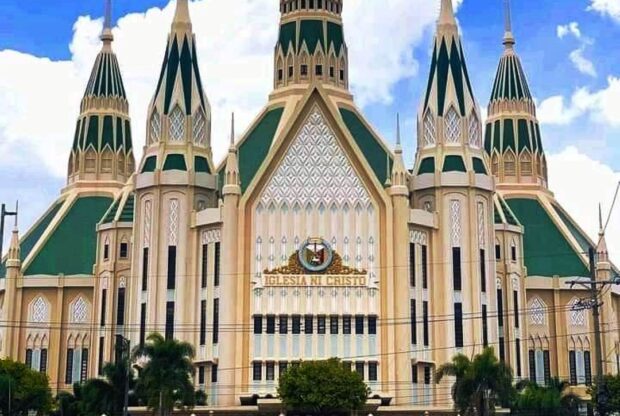
This problematique speaks directly to the nature of the mass demonstration mobilized by the Iglesia ni Cristo (INC) along EDSA, right at the foot of the People Power Monument.
Those who view this protest critically and dismiss it as an elite-driven mobilization are entirely justified. The INC has a long, documented history of complicity with ruling elites—from its alignment with the original Marcos dictatorship and its crucial backing of the Marcos Jr.–Sara Duterte “Uniteam” in 2022, to its current patronage of the violent Duterte faction. Ultimately, the INC leadership has simply chosen its side in the war between two rotten political dynasties, opting for the Dutertes over the Marcoses.
Once again, the institution has successfully weaponized its membership. Just as they do during election cycles, the INC leadership dangles its bloc-voting power like a choice piece of longganisa before a crowd of corrupt, salivating politicians.

Is this “cultic” behavior?
Is this behavior cultic? It could only be described as such if it were driven by a defense of deeply held religious doctrines perceived to be under threat. But pray tell, which INC doctrine is being violated by the impending arrest of Senator Marcoleta on charges of plunder?
This is not cult behavior. This is the INC flexing its muscles as a deeply sectarian political player, hellbent on supporting a specific faction of the local oligarchy. The motivations here are purely transactional for its leaders—certainly not for its massive membership. What we are witnessing is the INC elite core dancing with the Duterte elite. It is rottenness begetting rottenness—a religious denomination closing in on itself while merging into the country’s dynastic politics.
There is absolutely nothing here that expresses the unyielding faith of human beings mobilizing to save their nation. It is deeply tragic when religious organizations are commandeered by their leaders to reproduce impunity and oligarchic politics.
Yet, it is not too late for our brothers and sisters within the INC to become part of this genuine struggle for change. In the biblical narrative of the Exodus, the cry to “let my people go” was a demand for absolute liberation. Applied to the present, this is not a mandate to keep them shackled to elite politics. In the absence of such a liberating leadership today, we must look to our own history. When Filipinos rose against foreign colonialism and domestic dictatorship, they did not do so as subservient members of a religious hierarchy. They stood up as human beings who understood that the freedom of a people is a higher calling than any directive handed down from the highest chain of command.
Filling the political vacuum
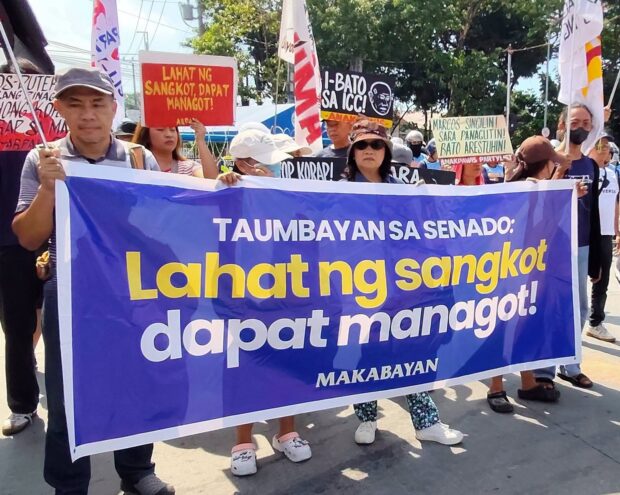
This spectacle is the direct symptom of a profound vacuum in political sense-making. It happens in the absence of a strong political organization capable of providing an analysis that genuinely grips the masses—one where everyday people can see themselves not just in the critique, but as the central agents breaking free from an unsustainable social order.
We have seen such moments in history: times when the masses rise independently of elite interests and elite funding. It can be done. And I am not even talking about starting from scratch; I am talking about pragmatically building upon an existing movement. We already have a movement that consistently musters the largest mobilizations nationwide (albeit still not enough) backed by an analysis that is both broad and precise. It is a framework that directly addresses the deep entanglements between the country’s agrarian issues, imperialist plunder, and bureaucrat capitalism.
This movement and its allies—spanning from faith-based to patriotic formations, from cultural and academic institutions to liberal, progressive, left, and socialist groups—are in the best position to fill that political vacuum. They can inject real stakes and a vocabulary that refuses to pander to the establishment’s appetite for “acceptable dissent.” Instead, they offer a collective analysis of struggle that must be embraced—a narrative that gives us the confidence to keep writing our own history. #