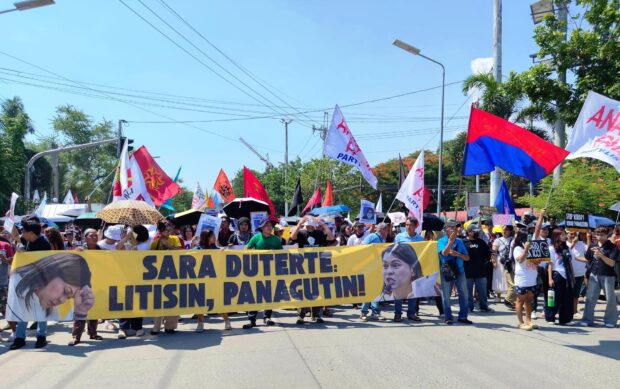
The court that convicted journalist Frenchie Mae Cumpio and lay worker Marielle Domequil guilty of “terrorism financing” has denied their petition on bail.
Judge Georgina Uy Perez of Branch 45 of the Tacloban Regional Trial Court said in her February 13 decision that granting bail to the two “increases the risk of evasion.”
[A]fter a careful evaluation of the records and the prevailing circumstances, this court finds no strong or compelling reason to justify the grant of bail during the period to appeal. Consequently, the Joint Motion to Allow Accused to be “Admitted to Bail, is hereby DENIED for lack of merit,” Uy-Perez wrote.
Cumpio and Domequil’s motion for bail came after their conviction of financing terrorism charges last January 22, which press freedom advocates slammed for being based heavily on the incredible testimonies of dubious witnesses.
READ: Cumpio is nominee to this year’s UNESCO press freedom award
Human rights group KAPATID assailed the denial and appealed for immediate review by the Court of Appeals, citing grave abuse of discretion and serious constitutional concerns.
The political prisoner support organization pointed out that the two detainees have already spent six years in jail on illegal possession of firearms and explosives Uy-Perez herself said they were innocent of.
“The continued detention of Frenchie and Marielle on the basis of ‘potential’ assistance is a dangerous departure from fundamental principles of criminal law,” said Fides Lim, spokesperson of KAPATID.
“Criminal liability requires proof beyond reasonable doubt of a clear, intentional, and overt act. Liberty cannot be curtailed on speculation,” Lim added.
Lim explained that when allegations fail to establish intent, continuing detention based on vague fears exposes the fragility of the case.
KAPATID noted that these concerns are reinforced by the Court of Appeals’ earlier reversal of the civil forfeiture of funds seized during the same 2020 raid for lack of factual and legal basis.
The appellate court found no demonstrable link between the funds and any terrorist organization—substantially weakening the prosecution’s terrorism narrative.
Under Philippine law, bail pending appeal may be granted when the penalty imposed is not life imprisonment and when substantial doubts attend the conviction. Terrorism financing does not automatically bar bail, and the record shows serious questions regarding the sufficiency of the evidence.
“KAPATID stresses that with no proven criminal intent and key elements of the prosecution’s theory dismantled, continued detention is legally and morally indefensible. Justice demands evidence, not conjecture,” Lim said.
“Bail protects the presumption of innocence and due process. Denying it on the basis of mere ‘potential’ undermines the fundamental liberties the Constitution safeguards,” Lim concluded. # (Raymund B. Villanueva)