The exodus from the cities to the countryside had begun for millions of Filipinos observing the Christian Holy Week. It means a scramble for bus, boat and, for those who can afford it, plane tickets to the provinces of their birth to spend a few days with kin and childhood friends.
For most of them, it also means a chance to have a taste of their Lenten food favorites they grew up eating.
Catholics in the predominantly Christian country developed meals and snacks that are without meat or seafood, in keeping with the spirit of abstinence that should be the prevailing mood of the occasion. Regions of the Philippines have their own favorites, and here are some of them.
Visayas and Mindanao
Nothing is bigger than binignit in the Visayas and Mindanao. Its base is a generous amount of thick coconut milk that automatically gives it sweetness. What make it special are the various other ingredients such as taro (gabi), sweet potato, and ube, along with bananas and jackfruit. Lately, tapioca pearls also made it to the colourful and tasty mix. To make it even sweeter, brown or muscovado sugar is added.
It is famously prepared and eaten, especially on Good Friday during Holy Week, as a meat-free, sweet, and hearty dish.
Binignit is so popular, in fact, that it is sold on roadside stalls all year round. But each family is expected to prepare their own during Holy Week, one that city-based family members go home to every time.
Tagalog Region
There is a version of the binignit that Tagalogs prepare called the ginataang bilo-bilo. It is very similar with the binignit as it uses the same ingredients with the addition of chewy rice balls.
The colourful ingredients of the ginataang bilo-bilo are expected to be swimming in thinner cooked coconut milk. There may be less of the fruits and tuber in the ginataaang bilo-bilo compared to the binignit, but this is offset by the rice balls that give the dish its name. Sugar is also added.
Like the binignit, the ginataang bilo-bilo is a staple during Holy Week. But it has also become a daily fare as it is sold on roadside stalls in big steel pots.
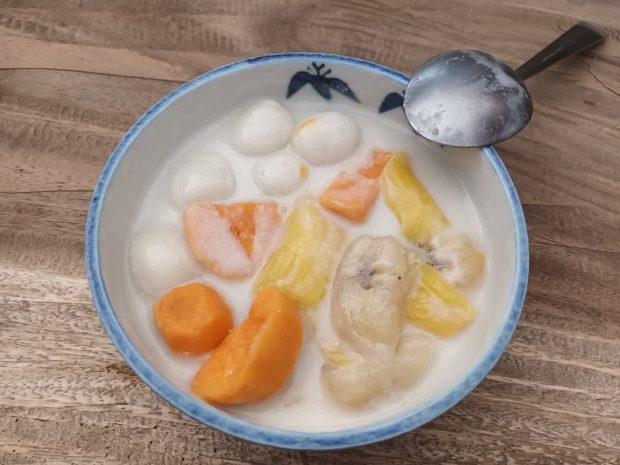
It must be mentioned, however, that aside from being cooked in largely the same manner, many Filipinos mix the ingredients of the binignit and the ginataang bilo-bilo without knowing the difference.
Ybanags
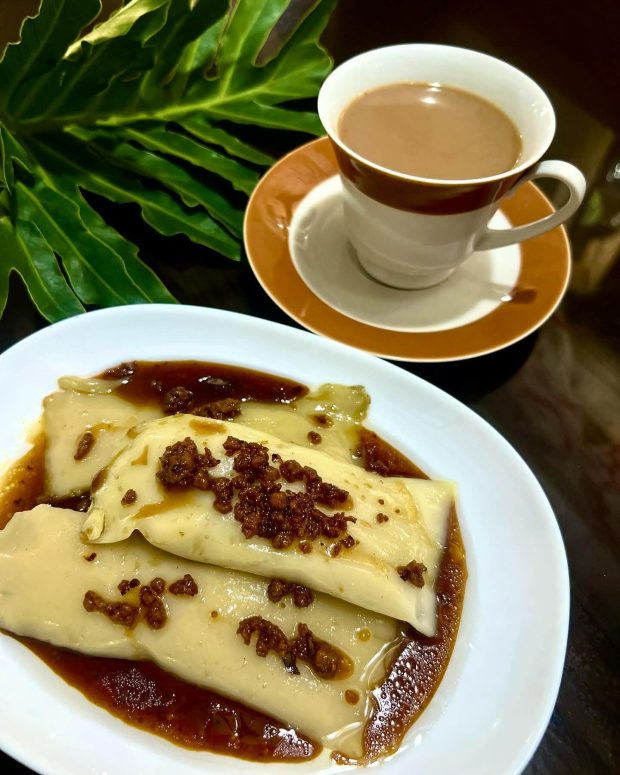
Up north, there is one cake that remains to be almost exclusively consumed during Holy Week. The Ybanags of Cagayan Valley call it the binalay.
It is made of sticky rice flour, wrapped in banana leaves, and steamed for a few hours. When wrapping the binalay, the banana leaves are brushed with oil in order that it does not stick too much. But that is the easy part.
Preparing the binalay’s caramel sauce takes more time and patience. Coconut milk is patiently cooked until only the oil and dark brown granules remain. The oil is separated and the granules are added to caramel that becomes the sauce for the binalay.
Eating the binalay also takes patience. It cannot be unwrapped in one easy movement. The banana leaf must be peeled in small sections to reveal the steamed rice flour inside. The caramel and the coconut granules are then poured onto the sticky rice cake.
The Ilocanos
The deeply religious people of the Ilocos Region of the Philippines must have their versions of “mak-makan iti Semana Santa” (food during the Holy Week). But one of the most popular among many is masa podrida that is popular in the Heritage City of Vigan.
The masa podrida is a cookie-like bread that is crunchy on the outside and soft on the inside. This golden-brown treat is packed with a rich filling which may be of any available ingredient or the baker’s preference – as long as it is not meat.

A bakery in Vigan owned by Mila Torres is famous for offering masa podrida, along with other Lenten treats such as the londres. The londres is a spongy foam cake glazed in caramelized sugar and filled with a citrusy, sweet filling. Then there is the bolero, a smooth, soft, and milky bun that is perfectly complemented by a caramelized sugar coating and a cool, subtle custard filling; and goloria, a sugar-coated delicacy that is soft and squishy like a donut and made using a fascinating sugar-coating ritual.
Like the binignit, ginataang bilo-bilo and the binalay, these Ilocano pastries are consumed as some form of fasting and abstinence from meat during the Holy Week.
This sacrifice, however, does not take away the fun in their consumption, a practice that has become a unique Filipino way of remembering Jesus’ sacrifice at the cross. # (Raymund B. Villanueva)