Hundreds of cyclists called for human rights, climate action, environmental protection and safer urban mobility in an annual biking activity in Quezon City on Saturday.
Earth Island Institute-Philippines (EII-Ph) held its annual Pedal for the Planet event a few days before International Human Rights Day on December 10, highlighting demands for safeguards for environmental defenders nationwide.
EII-Ph said local environmentalists are facing escalating threats, such as harassment and red-tagging for their defense of the environment.
The Philippines is Asia’s worst in the killing of environmental defenders with at least at least 468 deaths between 2012 and 2023.
In 2023 alone, there were 17 recorded killings in the country.
EII-Ph said the event is in solidarity with frontline communities opposing destructive projects and called on policymakers to uphold environmental and human rights protections.
Being kind to bikers
Themed “Be a Hero for the Planet,” cyclists from grassroots communities, advocacy groups, and partner organizations also pedaled for climate justice, biodiversity protection, greener cities
“Every cyclist has the right to safe, accessible, and protected roads. Road safety is not just a transport issue—it’s a human rights issue,” said Mia Bunao of Kalyetista, stressing the need for secure bike infrastructure and equitable mobility policies.
E-bikers (bikers with electricity-powered or assisted vehicles) were among this year’s participants who expressed concern over inconsistent regulations restricting their use on major roads despite the lack of alternatives for commuters.
Road regulators recently announced that electronic bicycles and tricycles are no longer allowed in major Metro Manila streets starting this month.
President Ferdinand Marcos Jr. ordered its deferment to January of next year.
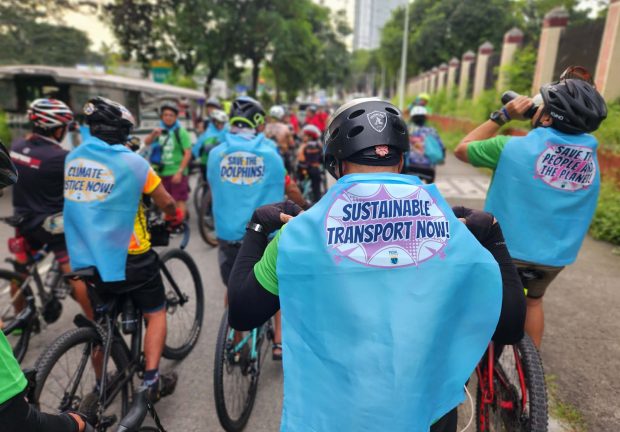
The e-bikers however noted that the policy disproportionately affects low-income riders and contradicts national goals for greener transport — especially when only about 10 percent of Filipinos own cars.
They complained that the government remains car-centric in its planning and policies despited worsening transportation problems nationwide.
EII-Ph reiterated that traffic congestion is caused by cars — not bike lanes — and urged the government to prioritize moving people, not vehicles, through improved public transport and protected active-mobility networks.
Advocates emphasized that the worsening traffic crisis — driven largely by private car use — underscores the urgency of investing in active transport, accessible public transit, and pedestrian-friendly communities to reduce emissions and build sustainable cities.
Waste crisis
Pedal for the Planet likewise brought attention to Metro Manila’s worsening waste crisis during the Christmas season, when daily garbage generation spikes to up to 12,600 tons, much of it plastic.
This waste often ends up in waterways and oceans, endangering marine wildlife and threatening the country’s food security, EII-Ph said.
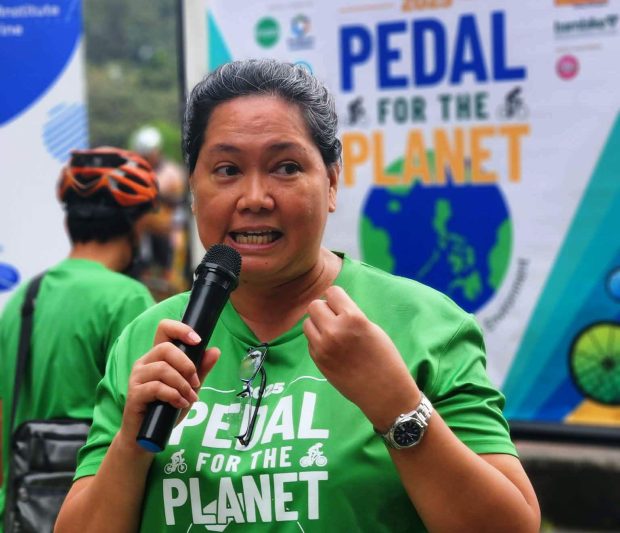
Earth Island Institute Asia Pacific Regional Director Trixie Concepcion said the mass ride reflects a growing movement of ordinary citizens choosing to act amid escalating environmental threats—from plastic pollution and unchecked development to the decline of coastal ecosystems.
“At a time when environmental destruction, plastic waste, and climate impacts threaten our communities, our oceans, and even our food security, events like this remind us that ordinary citizens can be everyday heroes,” Concepcion said.
“When we bike, when we reduce waste, when we speak up, and when we stand with defenders and vulnerable communities—we already help shape a better future for the planet,” Concepcion added.
Protecting the seas
The connection between waste, oceans, development aggression, and human survival was pointed out by fisherfolk groups present in the event.
Ronnel Arambulo of Pamalakaya, speaking for coastal communities who are among the first to experience pollution and destructive development, underscored the urgency of protecting marine ecosystems.
“We depend on the sea. When it is filled with plastic, the reefs and fishing areas are destroyed,” Arambulo said in Filipino.
Arambulo added that reclamation projects contributed to their sector’s worsening poverty.
The organizers noted that the annual event continues to grow as a platform for environmental justice, sustainable mobility, and collective action—uniting cyclists, grassroots communities, environmental defenders, and urban residents for greener and more humane cities.
The event was organized with partners 350 Pilipinas, Pamalakaya Pilipinas, Firefly Brigade, Kalyetista, Unli-Sulong Bikers United, Maginhawa Eco Store, the Quezon City Government’s Department of Public Order and Safety, and various cycling and environmental groups. # (Raymund B. Villanueva)
= = = = = =
Kodao Productions is a media partner of this year’s Pedal for the Planet.